“Giving birth should be your greatest achievement not your greatest fear.”

~Jane Weideman

.

Birth is Sacred. It is powerful, and mysterious, and life changing. After your birth, you and your partner will never be the same. Babies who come into this world without medication or interference are better able to find their way to the breast and to latch on in that first important hour. They are born alert and ready to meet you face to face. Mothers who are educated about birth and trust their bodies and attendants are more likely to have a smooth birth experience, and feel empowered in doing so.
Showing posts with label doulas. Show all posts

Monday, October 24, 2016

Nine Essential Oils & Helpful Recipes for Pregnancy & Birth


Lavender, Geranium, Cypress, Lemon, Clary Sage, Spearmint or Peppermint, Ginger, Tea Tree, 
& Rose

Many mothers wish to integrate essential oil treatments into their pregnancy routine.  If you're experiencing any of these common ailments, using essential oils is a great way to holistically treat them. 

Beautiful Belly Blend — 7 drop of rose, 6 drops of lavender, and 5 drops of orange blended into 2 Tbsp of almond oil, 1 Tbsp of wheat germ oil, and 10 drops of borage seed oil.

Varicose Veins — 15 drops of geranium, 5 drops of cypress, 2 drops of lavender, blended in 2 Tbsp of almond oil.  Rub into legs, stroking gently from ankle to thigh.

Hemorrhoids — 15 drops of geranium and 5 drops of cypress blended into 4 Tbsp of almond oil or into a small tube of KY jelly.  Apply to anal area as needed.  The essential oils can also be blended and add 2-3 drops into a sitz bath 3x/day.  

Insomnia— 1 drop of lavender on your sternum.

Nausea— 2 drops of spearmint and 1 drop of lavender mixed into 1 Tbsp of honey.  Stir into 1 cup of hot water and add the juice of one lemon. Use a maximum of 3 times a day for 6 days.  The oils can also be diluted in 1 tsp of almond oil and rubbed on your feet.  Ginger or lemon oil, 1 drop per bowl of hot water and inhaled deeply can help, also.

Muscle Cramps — 5 drops of geranium, 10 drops of lavender, 2 drops of cypress and 1 cup of Epsom salts in a warm bath.

Swelling— 3 drops ginger, 2 drops cypress, and 2 drops lavender blended in 2 Tbsp of almond oil.  Massage in with long strokes toward the heart.  Also helpful to add 1 drop of lemon oil to hot herbal for diuretic and cleansing.

Yeast Infections— 3 drops of tea tree oil in a sitz bath, or added to a light vinegar douche.  Do 3 times a day for 3 days, then follow with 3 days of plain, active yogurt inserted vaginally at night.

Perineal Massage— 5 drops of rose OR 3 drops geranium and 2 drops of lavender in 1 tsp of almond oil.  Massage daily for last 10 days— 2 weeks.

Stop Early Labor**— 5 drops lavender, 1 cup Epsom salt in a warm bath.

Enhance Early Labor and/or Strengthen Contractions**— 8 drops clary sage, 8 drops of lavender and 8 drops of rose in 4 Tbsp of almond oil.

New baby skin— 3 drops of lavender in 2 Tbsp of almond oil.  Massage in well.

Increase Breast Milk — 15 drops of geranium OR 10 drops of clary sage blended in 2 Tbsp of almond oil.  Massage under arms and around breasts once a day, wash off before breastfeeding.

**Always consult a midwife or birth professional before attempting these treatments.

Tuesday, October 11, 2016

Doula Meet & Greet


TONIGHT! Starting at 6pm is our Doula Meet & Greet!

Whether you are an Embrace client or not, you are welcome to come Meet and Greet with the doulas! Learn the benefit of having a doula at your birth, and have the chance to meet several in one place.  Every doula is there to provide educational, emotional and physical support both during and after pregnancy. Some have backgrounds in physical therapy, others in yoga or massage, but they all share a passion for giving you the support you need!

Monday, October 10, 2016

Rememdies for Minor Discomforts of Pregnancy


Photo Credit: babycentre.co.uk

You may have thought about how wonderful it would be to be pregnant…how your skin would glow and your hair would grow!  So, you might be a bit surprised that growing a tiny human affects EVERY part of your body, and some of those changes are a bit uncomfortable.

BACK PAIN— can start at 20 weeks and last until your baby comes.

- try pelvic tilts, yoga, walking (at least 20 minutes), swimming
- maintain good posture while standing, walking and sitting
- avoid standing for long periods of time
- avoid slouching as this can cause the baby to get into a malposition (check out www.spinningbabies.com)(seriously!)
- elevate one foot while standing
- avoid high heels, wear flat, well-supported shoes
- bend knees when lifting, keeping back straight
- roll onto your side prior to getting up from a lying down position
- use a pillow between your knees when sleeping
- keep weight gain to 30–35 pounds
- try a warm bath with 2 scoops of Epsom Salts or a heating pad on low or medium setting
- use of ‘prenatal cradle’ to support the abdominal muscles
- physiotherapy, chiropractic or massage therapy may be helpful
- alter your midwife of persistent back pain, or of any back injuries you may have suffered prior to this pregnancy
- SAFE MEDS: Tylenol, Motrin in 2nd trimester only

BLEEDING GUMS

- use a soft toothbrush
- ensure regular dental hygiene, flossing (you can run your floss through a drop of Tea Tree oil to assist with any infection of the gums
- dental checkups are generally safe
- ensure a healthy diet of fresh fruits and vegetables
- increase Vitamin C with Bioflavonoids to 500— 1000 mg a day

CONSTIPATION

- increase fluids, especially water
- have fluids prior to meals
- decrease dairy intake, increase high fiber foods (you may also use a fiber supplement)
- exercise such as yoga, stretching, walking
- 6 prunes a day or 2 cups of prune juice
- SAFE MEDS: Dulcolax stool softener, Colace, Metamucil, Citracel
- SAFE HERBS: Cautious use of Senna or Smooth Move tea. Psyllium supplements are safe in moderation

HEADACHES

- eat regularly, with 8–10 grams of protein every 2 hours
- increase fluids, consider drinking 1 bottle of water by 10,12, 2, 4, and 6
- rest with a cool cloth on the forehead
- decrease stress and practice relaxation techniques
- consider massage therapy or chiropractic care
- keep a food diary, if headaches are frequent or chronic
- SAFE MEDS: Tylenol, Motrin in 2nd trimester only

*consult your doctor or midwife if headaches persist or if they are severe

HEARTBURN— from 20 weeks to term

- try dry crackers before you get out of bed
- avoid irritating, spicy or greasy foods
- eat smaller meals and eat more often
- chew slowly and thoroughly
- reduce, discontinue or change iron supplement
- sleep propped up
- try 1tsp of apple cider vinegar or lemon juice
- try papaya enzymes
- chew 6 raw almosts 75 times
- prop the head of your bed up 4 inches and never lie down after a meal
- SAFE MEDS: Zantac and occasionally, Tums (Tums is NOT good for frequent use!)

HEMORRHOIDS— What a Pain in the Butt! from 24 weeks to term

- daily kegel exercises (talk to your midwife for proper instruction)
- lie don and elevate hips and feet 10 to 15 minutes, 3 times per day
- avoid constipating foods and salty foods
- ensure fluid intake is adequate (8–10 glasses of water per day)
- SAFE MEDS: Preparation H and Tucks

*If your hemorrhoids are protruding, they will feel much better if you can tuck them back inside your anus, and then lay down and elevate your hips while tightening your glutes
*Consult your midwife if hemorrhoids persist or bleed

INSOMNIA— usually from 28 weeks to term

- exercise daily, a minimum of 20 minutes of walking
- get plenty of fresh air and sunshine
- eat meats early (full stomach = heartburn)
- avoid taking multi-vitamins before bed or during the late afternoon
- avoid caffeine
- have a warm bath with Epsom Salk, or take a dose of Calm (magnesium supplement)
- practice relaxation breathing exercises
- SAFE MEDS: Benedryl or 1/2 of a Unisom

*Consult your midwife if insomnia is not resolving

NAUSEA & VOMITING— usually lasts from 4 to 16 weeks, but can last longer

- discontinue taking prenatal vitamins with iron for the first 12 weeks
- continue taking 0.4mg of folic acid as a separate supplement during the first 12 weeks
- eat frequently, especially crackers, dry toast, cereal
- prepare foods with little odor
- avoid greasy and spicy foods
- take B6— 25mg, 3x a day
- snack just before bed
- increase rest
- try eating only one food at a time
- try eating 6 small meals rather than 3 large meals
- try ginger tea, peppermint tea, raspberry leaf tea
- try peppermint Altoids, or Ginger Chews
- try 250mg of ginger 4x a day
- try to eat a small amount of protein every 2 hours

*If vomiting persists, consult your midwife immediately

SWELLING— usually occurs after 28 weeks and may affect feet or hands

- elevate feet twice daily for 15 minutes at a time
- lie on your left side when resting and sleeping
- increase water intake and add fresh lemon
- change your position frequently to enhance circulation

*symptoms such as headaches, blurry vision, upper right gastric pain or rapid onset of swelling should be reported to your midwife immediately

VARICOSE VEINS— from 16 weeks to term

- wear maternity support hose
- try ice packs to affected areas
- exercise daily
- drink plenty of water
- lie down and elevate legs 10 to 15 minutes 3 times per day
- avoid sitting or standing for long periods
- ask about our Varicose Vein Massage Oil at your next visit

*Consult your midwife if you experience painful swelling, increased heat, redness, or tenderness

Although pregnancy aches and pains can make everyday life less fun, remember that pregnancy doesn’t last forever, and you are doing big work every day growing a new life.

Usually, almost always, the discomforts don’t mean anything terrible, and they are just your body adjusting to all the changes that the new baby is bringing.

This, too, shall pass.

Wednesday, September 28, 2016

Breastfeeding Support


Come to Embrace Wellness Collective today at 11am for our free breastfeeding support group! We are offering a safe place for breastfeeding moms, moms-to-be, or those at any stage in the breastfeeding relationship!  Emily Mozingo will be leading the group and is a Certificated Lactation Educator Counselor (CLEC).

For more information, you can contact Emily at littlelovebirdservices@gmail.com

Tuesday, September 27, 2016

The Power of a Calm Birth


We are totally in love with this BEAUTIFUL viral video that shows this calm, centered mother in the precious moments before birth.  I have experienced this type of serenity in childbirth first-hand during my time as a midwife in Trinidad & Tobago where mothers gave birth in the warm island waters.  I had to figure out what their secret was and I was amazed to find out it was Hypnobirthing.  We are a huge advocate of this practice because it empowers mothers to be in control of their experience and gives them powerful methods for pain management.  I recommend taking a hypnobirthing class to all mamas!  


Viral Video Proves Childbirth Can Be Amazingly Serene
This mama looks incredibly peaceful delivering her baby in a birthing pool, giving us major labor goals.
By Zara Husaini Hanawalt

When you think about childbirth, you might imagine a woman moaning in pain, covered in sweat, tears or worse. While giving birth can be an incredibly challenging physical feat, it's also not every woman's experience. 

Need proof? This video is going viral for good reason: It shows a woman experiencing childbirth in a way that's completely unlike the depictions of it we so often see on TV and in movies. There's no screaming, no sweating, no struggle here—the mother remains completely calm and serene as she delivers her baby. 

Midwife Lisa Marie Sanchez Oxenham posted the video on Facebook, where it is getting lots of attention. Though it's not even a minute long, it gives viewers such a clear picture of how unbelievably relaxed the mother was during her delivery, which takes place in a birthing tub. 

“My client Audra’s beautiful second home birth,” Oxenham writes alongside the video, which has been shared over 86,000 times. “A midwife’s role is fluid, providing whatever is necessary for each individual birthing experience, although almost always that role is simply to offer the gift of quiet.”

This home birth looks so tranquil, doesn't it? What do you think of the video—does it make you want to deliver your baby at home or in water?

Click here to view the original article.

Wednesday, September 14, 2016

Doula Meet & Mingle


Don't forget to come out TONIGHT starting at 6pm for our Doula Meet & MIngle! Every doula is there to provide educational, emotional and physical support both during and after pregnancy. Some have backgrounds in physical therapy, others in yoga or massage, but they all share a passion for giving you the support you need!

Friday, September 2, 2016

The Role of Doulas in Reducing the Primary Cesarean

Coming up on September 14th, Embrace Midwifery Care & Birth Center will be hosting another Doula Meet and Greet!  We believe in the power of a positive support team during your pregnancy.  Our doulas specialize in everything from massage therapy to prenatal yoga, but they all specialize in meeting your needs.  Yet another reason to bring a doula into your birthing plan comes this article, highlighting their role in reducing the primary cesarean.


The Role of Doulas in Reducing the Primary Cesarean
Article published on Donainternational.org

The rise in cesarean birth rates and the effects of cesarean birth on mother and baby have become common themes in articles about birth and medical care. It seems everyone from the American Congress of Obstetricians and Gynecologists (ACOG) to Consumer Reports to mommy blogs are talking about the need to reduce the number of cesarean births in the United States. Doula support as a way to help achieve a lower cesarean birth rate was first acknowledged by ACOG in 2014. Doulas have again received a strong endorsement for the role we play in supporting vaginal birth, this time from the California Maternal Quality Care Collaborative (CMQCC).  Their evidence-based Toolkit to Support Vaginal Birth and Reduce Primary Cesareans for maternity care practitioners outlines seven strategies, one of which is to #4 Encourage the Use of Doulas and Work Collaboratively to Provide Labor Support.  Their view of doulas can be summed up in one simple quote from the Toolkit:

“Doulas should be considered an integral part of the birth team.”

— California Maternal Quality Care Collaborative, Toolkit to Support Vaginal Birth and Reduce Primary Cesareans (p. 46)

The Toolkit also addresses the role of doulas and how to promote stronger teamwork with nurses. That some providers may not understand the role of doulas and may have an “antagonistic or adversarial view of them” is not ignored (p. 40). Doulas are described as having a unique skillset, and it is noted that we can be both an advocate for the birthing woman and be an ally to care providers, including nurses, when we are allowed to “function appropriately” in our role. The authors are aware that doulas have not been fully accepted in all hospital settings and “there are still many misconceptions about doula care, and often there is a stigma surrounding the ‘type’ of woman who has a doula.” (p.46)

To address this, the Toolkit provides specific recommendations to better integrate and support doulas.


KEY STRATEGIES FOR SUPPORTING INTENDED VAGINAL BIRTH


— Toolkit to Support Vaginal Birth and Reduce Primary Cesareans, Table 9

In detailing this strategy, the Toolkit offers specific recommendations to promote stronger relationships between doulas and nurses to support vaginal birth including:


  • Open communication between the doula and the nurse and a “mutual understanding of roles.” Unit guidelines may need to be developed to foster delineation of roles and expectations. Posting these guidelines at the bedside may be useful.
  • Collegial rapport and joint understanding that the doula’s professional knowledge of labor support techniques complements the nurse’s extensive technical and medical skillset
  • Two-way teaching. Doulas appreciate thoughtful and respectful guidance and feedback, especially those training for future medical or nursing professions. Likewise, nurses and nursing students can learn extensive labor support skills from doulas if willing to do so.


For hospitals, the Toolkit offers these “Innovative strategies to support the use of doulas”:


  • Working with a local doula organization to provide information, support, and resources to families
  • Connecting with community-based doula programs
  • Considering the implementation of a hospital-based program


Many of the strategies outlined in the Toolkit speak to maternity care practices and hospital policies that support vaginal birth.  The importance of education for birthing families is mentioned in more than one strategy with recommendations that practitioners educate families on what to expect in early labor, the safety of laboring at home in early labor, comfort measures partners or other family members can provide throughout labor, and the use of intermittent monitoring in labor. The importance of childbirth education is emphasized in a list of tools available to providers, hospitals and families in Appendix C of the toolkit as well.

The Toolkit is free to download from their website after registering with CMQCC and completing a short survey. As a follow-up, CMQCC will be releasing both a teaching slide set and an implementation guide.

— Adrianne Gordon, CD(DONA), MBA

References

Smith H, Peterson N, Lagrew D, Main E. 2016. Toolkit to Support Vaginal Birth and Reduce Primary Cesareans: A Quality Improvement Toolkit. Stanford, CA: California Maternal Quality Care Collaborative.

Friday, August 19, 2016

The Doctor, The Midwife, The Nurse & The Doula

Addressing the most common questions and concerns of many expecting parents, but often times, their extended family.  We have so many mothers who walk through our doors wanting to have a natural birth administered by a midwife, but are lacking support from their family members.  It is understandable for parents, grandparents, aunts and uncles to be concerned for the well-being of you and your new family, but ultimately it is not their birth.  We believe that good information and the best up to date research is a great tool to ease the minds of concerned parties when it comes to your pregnancy.  Starting with the fundamentals....


The Doctor, The Midwife, The Nurse & The Doula
From The Prenatal Yoga Center

I wanted to share some questions with you that I am asked on a regular basis: “What is the difference between a midwife and a doula? “; “Does my doctor work with my midwife?”; “Why would I choose a midwife over a doctor?”; “Isn’t the nurse like a doula?” I figured the best way to answer all of these questions would be to finally sit down and map it out.

First, let’s understand the definitions of those terms and the job of each of the people mentioned.

Obstetrician: A physician who delivers babies and is in the practice of obstetrics, the art and science of managing pregnancy, labor and the puerperium, the time immediately after delivery.

You will see your OB/GYN or members of his/her practice throughout your pregnancy, although who your care provider will be at delivery depends on who is on call during your labor. During the labor, the doctor will come in and out to check on your progress and, as the definition above states, “manage” your labor. Obstetrics is also a surgical field, so in the case of a cesarean, it would be your OB that would perform the procedure.

Midwife: A midwife is a trained professional with special expertise in supporting women to maintain a healthy pregnancy birth, offering expert individualized care, education, counseling and support to a woman and her newborn throughout the childbearing cycle.

A midwife works with each woman and her family to identify their unique physical, social and emotional needs. When the care required is outside the midwife’s scope of practice or expertise, the woman is referred to other health care providers for additional consultation or care.

Midwives operate from The Midwives Model of Care which emphasizes the fact that pregnancy and birth are normal life processes. Midwives statistically have lower rates of interventions and provide the mother with individualized education, counseling, prenatal care and postpartum support as well as continuous hands-on assistance during labor and delivery.

Midwives, like doctors, may work in a group that rotates who is on call and who will see you for your prenatal visits. Some midwives work alongside doctors in their practices, while some work individually or outside the hospital setting. There are different types of midwives: Direct Entry Midwifes, Certified Professional Midwives, and Certified Nurse Midwives. Depending on their credentials and training, some midwives work in hospitals while others solely attend home births.

Labor and Delivery Nurses: Nurses in this field provide care to women who are in labor or who have recently delivered, or for those who may be having complications with labor. They also work with doctors to develop a plan to aid in the safe delivery of healthy babies.

Labor Support Doula: A trained and experienced professional who provides continuous physical, emotional and informational support to the mother before, during and just after birth; or who provides emotional and practical support during the postpartum period.

Unless the doula has additional training, she is NOT a medical professional and will not perform medical procedures on the laboring mothering or deliver the baby. However, she most likely will be one of the most consistent elements of the labor experience. She does not change shifts and only deals with one client at a time. The doula will also labor with you at home and come with you to the hospital or birth center.

Now that there is an understanding of what each professions offers, it may be clearer how they might or might not work together. So, back to the original questions:

What is the difference between a doula and a midwife?

As described above, the doula acts as an emotional, physical and informational support for the mother. While the midwife may offer many of those same qualities, it is the midwife that will deliver the baby and perform the necessary medical examinations throughout pregnancy, labor, delivery and postpartum. Midwives are also available to do “well woman” yearly exams throughout a woman’s life, not just working with her while pregnant.

Does my doctor work with my midwife?

Yes, sometimes a practice has both doctors and midwives. But if your current doctor does not work with midwives you cannot have both as care providers. If a midwifery practice does not have a doctor as part of the group, there will be a doctor that backs up that group. However, if you choose a home birth, you will have just a midwife; should you need further medical assistance, you would be transferred to a hospital. Some midwives have privileges at a hospital, while others just have a relationship with a doctor and will no longer be your care provider should you be admitted.

Why would I choose a midwife over a doctor?

Choosing your care provider is a very personal choice. It requires a long, hard look at the model of care you would like for your pregnancy and delivery. While both professions try to offer the best care they can to women, the path in which that support is offered differs. The Model of Care that midwives subscribe to reflects the idea that pregnancy and birth is a natural physiological process that should be inherently trusted, while the medical model focuses on the pathologic potential of pregnancy and birth. They both have the same desired outcome, but use different routes to get there.

You should also consider the style of care you personally prefer. Midwives will tend to be more present during labor; moreover, they will be more holistically based and allow more space for the labor to unfold naturally before moving to medical interventions. Doctors are not as likely to give you as much personal care and time and may move to medical interventions more quickly.

Isn’t the nurse like a doula?

Many of the Labor and Delivery nurses (L & D nurses) I have worked with are wonderful and can offer a lot of helpful advice for the laboring mom. However, I would not advise depending on your L & D nurse to provide the same comfort and assistance as a labor support doula. The L & D nurse often has several women they are monitoring at the same time and cannot offer consistent support since they work in shifts and breaks. You may also find it appealing to choose your labor support doula and have the opportunity to previously discuss you birthing preferences with this person.

Now that the cast of characters has been laid out, I hope this makes it easier to make decisions about the model of support you will receive and who you would like at your birth.

Wednesday, August 10, 2016

Meet & Greet Our Doulas TONIGHT!


TONIGHT! Starting at 6pm we will be having a meet and greet with our fabulous team of doulas. Everyone is welcome and you certainly don't have to be a client of ours.  Come learn the benefits of hiring a doula for your pregnancy.  I always say the job of a doula is to make the Dads look like rock stars!  They are the ultimate support for any expecting mom and always have a wide range of skills to meet your personal needs.  Some of our doulas specialize in yoga, some of them in massage therapy, aromatherapy, nutrition....each one of these ladies has something special to offer their moms.  So come meet the perfect doula match for you!

Wednesday, July 20, 2016

To Push or Not To Push? Only you can answer that question!

The more research that goes into birth, the more we find out how instincts and natural intuition plays a role in successful birthing.  As a western culture we have grown accustom to doctors telling us how to care for our bodies as if it were separate from ourselves.  Ultimately, if we are in tune with our bodies, we can decide the right steps to take as long as we have access to good information!  That is our ultimate goal at Embrace Midwifery & Birth Center, to equip you with good information for you to make the best decision for yourself!  We believe all birth is beautiful and agree with Dr. Rachel Reed, the author of this wonderful article that, "a powerful, primal, loud and ‘out of control’ birth is just as amazing and valid as a gentle, quiet ‘in control’ birth."


Pushing: leave it to the experts
By Dr. Rachel Reed

A birthing woman is the expert regarding when and how she pushes. Providing directions implies she needs our guidance and we are the experts. Of course each woman and birth situation is different and in some circumstances guidance may be helpful for a woman. This post will examine the implications of telling women when to push, how to push and not to push during birth.

This post is based on part of a literature review I carried out for my PhD. You can find more information and the reference list in my Phd thesis (p.19 to 24) or on a research poster you can download here.

Telling women to push

There is overwhelming evidence that directed pushing results in increased morbidity for both mother and baby, and amongst other things is associated with: Mother – altering body fluid pH resulting in inefficient uterine contractions; maternal fatigue; and metabolic acidosis. Baby – interferes with the gradual descent and rotation and increases risk of hypoxia.

In addition directed pushing does not reduce the duration of the ‘second stage’. However it does result in the common scenario of: Woman is directed to push = baby becomes hypoxic and fetal heart rate abnormalities are heard… woman is shouted at to push harder to get her stressed baby out quickly… woman pushes harder… baby becomes more hypoxic and stressed… obstetrician is called in to rescue the baby and pull it out.

Telling women not to push

The cervical lip

The most common reason for telling a women not to push is that her cervix is not fully dilated. Often when a baby is in an occipito posterior position the woman will feel the urge to push before the cervix is completely open. She is then told not to push because the lip will swell up (and/or tear) and prevent the baby from descending. Not pushing is an almost impossible task and many women in this situation opt for, or are encouraged to have an epidural so they can stop pushing. The baby is then less likely to rotate into an anterior position because the pelvic floor tone is reduced and the woman is unable to move.

There is no evidence to support his notion of a swelling cervix and I am yet to encounter the situation as a result of  ‘premature pushing’. In some cultures it is tradition for the woman to push with each and every contraction from the beginning of labour. Surely these cultures would have died out if the outcome had been swollen/torn cervices and stuck babies. Studies (Borrelli, Locatelli & Nespoli 2013; Downe et al. 2008) have found that the incidence of ‘early pushing urge’ EPU (as it is referred to in the literature) is between 20% to 40% and is not associated with complications.

When we tell a woman not to push the message is ‘your body is not working correctly and is sending you the wrong messages – you need to fight against it’. Fighting her body until she is ‘allowed’ to push may result in difficulty switching into trusting and following her body once given the ‘go ahead’ (Bergstrom 1997). For more information about pushing and cervical lips see this post.

Breathe don’t push***

I need to breathe before I write this next bit as I am sure it will offend many – some of them my friends. So please feel free to comment and share your alternative views. Here goes… there seems to be a growing trend of telling women to resist their instinctive urge to push. The idea is to ‘breathe’ the baby down gently, and it does sound lovely. However, I have spoken to a number of women whose birth stories conveyed a sense of failure because they were unable to achieve this gentle ‘birth breathing’. I have also seen women attempting this during birth – struggling to breath upwards lightly to avoid the guttural downward pull of their body.

Hypnobirthing – the Mongan method seems to be one of the key advocates of this no-push technique and I recently read the book in an attempt to understand the approach. Overall the book has many positive messages for women about their innate ability to birth. However, I have concerns regarding some of the concepts (which I will blog about in the future) in particular ‘birth breathing’ . I agree that staff directed pushing is not good (see above) but I disagree with the following quote: “Often women speak of an overwhelming urge to push taking over. If this is felt it is also because of conditioning… our animal sisters elect to gently expel their babies” (Mongan 2005, p.129)

Pushing is physiological and instinctive, and a feature of all mammalian births. To tell a woman that if she pushes she has given in to external programming and her baby will not enjoy a gentle birth is disempowering – especially for those who fail to override their ‘conditioning’. A powerful, primal, loud and ‘out of control’ birth is just as amazing and valid as a gentle, quiet ‘in control’ birth.

***We strongly believe in choice, and while we are strong advocates of Hypnobirthing, we don't believe in edited or convenient information.  We have had an amazing success rate with our Hypno-mamas, and while we don't practice telling mothers when to push, we have too many amazing births and testimonies to reject its effectiveness and find that it does facilitate calmer births.

Suggestions for Midwives

Antenatally


  • Find out what the woman’s expectations are about this part of labour.
  • Reinforce her belief in her own innate ability to birth and explain that this is the reason you will not be telling her how and when to push. This is important as some women will interpret a lack of instructions as a lack of support if they are expecting to be told what to do (Anderson 2010; Parnell et al. 1993).
  • Encourage first time mothers to talk to other women and read birth stories written by birthing women. This will give her some idea about what it may feel like, and how different it is for each woman.
  • Show her ways to connect with her body and relax her pelvic tissues so that she can use this in labour if needed. 
  • If the woman is planning a hospital birth she will need to be prepared for hospital practices including directed pushing – a Doula and a birth plan can help. The Maternity Coalition have a good info sheet aimed at parents.

During birth


  • Avoid interfering with the physiological process ie. only do or say something if it is really necessary.
  • If the woman tells you she feels the urge to push, reassure her that this is good. Don’t tell her to push. There will come a point when she is pushing rather than feeling an urge to. Gloria Lemay has recorded an audio ‘pushing for first time mothers’ explaining why this is so important, especially for first time mothers.
  • If she is extremely tense and the baby is not descending encourage her to use the techniques she learned antenatally to relax her pelvic tissues and open.

In essence – telling women when to push, how to push or not to push contradicts the notion that women are the experts in their own births.

Pushing with an epidural

The information above is about physiological birth i.e. a woman birthing without intervention. An epidural can alter the ‘urge to push’ and prolong the descent of the baby once the cervix is open. An evidence based approach to pushing with an epidural is to wait until the baby’s head is visible i.e. is almost birthed. Then, if required, actively push to birth the baby… it should only take a few pushes. This approach reduces the chance of an instrumental delivery and decreases pushing time (Brancato et al. 2008). I have worked in a hospital where this was the standard approach and there was a lot less fetal distress and perineal trauma for women with epidurals.

It is also beneficial to help women with epidurals to get off their sacrum to increase pelvic space. So, semi-supine is perhaps the worst possible position. Many women can move and kneel or squat with an epidural – if not a side lying position allows the sacrum and coccyx to shift backwards.


For more great information and to read this article, visit MidwifeThinking.com

Thursday, June 9, 2016

Doulas Provide Emotional, Physical and Educational Support


Our Doula interns had a great time at the Doula Speed Dating event last night, we were happy to help those couples with their questions about the benefits of a doula.  Every doula is there for educational, emotional and physical support both during and after pregnancy.  Some have backgrounds in physical therapy, others in yoga or massage, but they all share a passion for giving you the experience you want and support without judgment!

Monday, June 6, 2016

Doula Speed Dating


Are you thinking about using a doula as a part of your birth plan?  Then please come to our Doula Speed Dating event this Wednesday at 6pm to meet and greet with Embrace Birth's Doula team! Whether you're an Embrace client or not, we invite all expecting families to join us for light refreshments and a chance to meet your local doulas.  Doulas are like birthing coaches, they can help you with techniques to manage pain during labor and are there to give you emotional, physical and informational support before, during, and after your birth.  Come learn all the benefits of having a doula and get an opportunity to meet....The Right One!

Tuesday, May 17, 2016

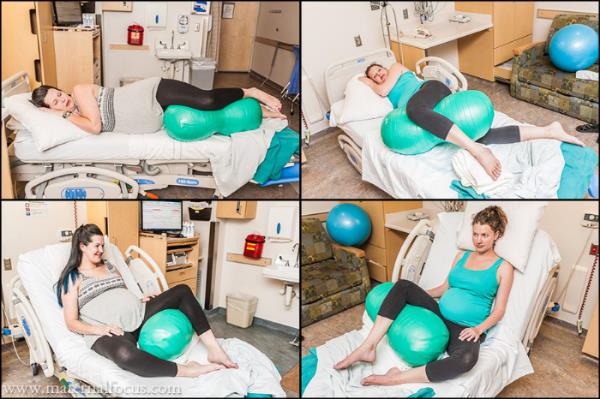
Using a Peanut Ball in Labor

From Director of Birthwell Birthright, Tanya Strusberg, comes an amazing article on the benefits of using a peanut ball versus pillows, blankets or even a traditional swiss ball.  Specializing in Lamaze childbirth education, she is a great resource for natural birth techniques.  We utilize the peanut at Embrace Birth Center and think it's an extremely useful tool for mothers to promote dilation and increase comfort.


What is a peanut ball and why could it be helpful for me in labour?

Most people are familiar with the standard birth ball (sometimes called a fit ball or Swiss ball). They come in a range of sizes to suit women of all heights and are without doubt an essential labour tool to have.

The standard round birth ball has become a common site in a birthing suite, but the peanut ball is a relative newcomer.  In the last few years, the use of a peanut ball for labour has increased, especially for mums who choose an epidural or who need to rest. The peanut ball doesn’t slip, slide or flatten like pillows, keeping a mum’s legs properly supported and the pelvis open. The use of a peanut ball has been seen to help shorten labour. Although there has not been a large study on their effectiveness, many midwives and hospitals are seeing excellent results.

A peanut ball is similar to a birth ball, except that it dips in the middle, giving it its distinctive peanut shape. Peanut balls also come in a variety of sizes, again depending on a woman’s height, but also depending on how she plans to use it. Smaller peanut balls are designed to be used between your legs, whereas larger peanut balls are designed to be sat on, or to lean over.


Peanut Balls are typically used two ways primarily:

1. The labouring mother is in a semi-reclined position, with one leg over the ball, and the other leg to the side of the ball. The doula, midwife, or other support person pushes the ball as close to the mother’s hips as is tolerable for her. Many feel this position promotes dilation and descent with a well-positioned baby.

2. While the mother is in a side-lying or semi-prone position, the peanut ball is used to lift the upper leg and open the pelvic outlet. Many feel this position helps rotate a baby in a less-favorable posterior position to a more favorable position for delivery.


What size peanut ball should I use?

Peanut balls come in a number of sizes:

45cm – Recommended for women who are under 160cms
50cm – Recommended for women who are 160cm – 170cms (most common size)
60cm – Recommended for women who are 174cm or taller or plus size women
70cm – ONLY to sit on and straddle


For the full article along with even more great resources, click here to visit the Birthwell Birthright website.

Thursday, May 12, 2016

Educating, Empowering & Encouraging Women from Pregnancy to Motherhood


Think about the first mother that ever walked the planet.  Then think about the second, the third, and so on. All helping the other give birth from having lived through it themselves. Soon there was an abundance of mothers and babies who now make up the more than 7 Billion human population on this earth. Wow, what a thought.

Women have been giving birth since the dawn of human existence and we truly feel in our hearts, is an intuitive experience.  All women know instinctively how to give birth. Midwifery has been practiced throughout the ages before there was medicine or hospitals.  It has been practiced all over the world with varying traditions and expressed uniquely through local cultures. We believe that giving birth is a sacred experience not only for the mother and her family, but the community.

Advances in medicine, technology and science have led us to the practices we use today. Ultra-sounds find the position and the sex of the baby.  We now know how to keep mothers healthy during their pregnancies with lots of heavy prenatal care bibles. There are vast hospital wings dedicated solely to pregnancy.  But with all of this technology, we believe the advantages of using a midwife is giving the human, emotional, intuitive and physiological profoundness of birth it’s proper reverence.


We nurture the deeply connective mother and child bond through safe delivery practices that don’t separate you from your experience. Instead, we give you the power of choice by giving you all of our knowledge.  We want to honor your traditions and listen to your wishes. We empower mothers!


Embrace midwives are highly trained, with a low tech, high touch mentality.  Our goal at the Embrace Birth Center is to educate, empower and encourage women from pregnancy to motherhood!