Addressing the most common questions and concerns of many expecting parents, but often times, their extended family. We have so many mothers who walk through our doors wanting to have a natural birth administered by a midwife, but are lacking support from their family members. It is understandable for parents, grandparents, aunts and uncles to be concerned for the well-being of you and your new family, but ultimately it is not their birth. We believe that good information and the best up to date research is a great tool to ease the minds of concerned parties when it comes to your pregnancy. Starting with the fundamentals....
The Doctor, The Midwife, The Nurse & The Doula
From The Prenatal Yoga Center
I wanted to share some questions with you that I am asked on a regular basis: “What is the difference between a midwife and a doula? “; “Does my doctor work with my midwife?”; “Why would I choose a midwife over a doctor?”; “Isn’t the nurse like a doula?” I figured the best way to answer all of these questions would be to finally sit down and map it out.
First, let’s understand the definitions of those terms and the job of each of the people mentioned.
Obstetrician: A physician who delivers babies and is in the practice of obstetrics, the art and science of managing pregnancy, labor and the puerperium, the time immediately after delivery.
You will see your OB/GYN or members of his/her practice throughout your pregnancy, although who your care provider will be at delivery depends on who is on call during your labor. During the labor, the doctor will come in and out to check on your progress and, as the definition above states, “manage” your labor. Obstetrics is also a surgical field, so in the case of a cesarean, it would be your OB that would perform the procedure.
Midwife: A midwife is a trained professional with special expertise in supporting women to maintain a healthy pregnancy birth, offering expert individualized care, education, counseling and support to a woman and her newborn throughout the childbearing cycle.
A midwife works with each woman and her family to identify their unique physical, social and emotional needs. When the care required is outside the midwife’s scope of practice or expertise, the woman is referred to other health care providers for additional consultation or care.
Midwives operate from The Midwives Model of Care which emphasizes the fact that pregnancy and birth are normal life processes. Midwives statistically have lower rates of interventions and provide the mother with individualized education, counseling, prenatal care and postpartum support as well as continuous hands-on assistance during labor and delivery.
Midwives, like doctors, may work in a group that rotates who is on call and who will see you for your prenatal visits. Some midwives work alongside doctors in their practices, while some work individually or outside the hospital setting. There are different types of midwives: Direct Entry Midwifes, Certified Professional Midwives, and Certified Nurse Midwives. Depending on their credentials and training, some midwives work in hospitals while others solely attend home births.
Labor and Delivery Nurses: Nurses in this field provide care to women who are in labor or who have recently delivered, or for those who may be having complications with labor. They also work with doctors to develop a plan to aid in the safe delivery of healthy babies.
Labor Support Doula: A trained and experienced professional who provides continuous physical, emotional and informational support to the mother before, during and just after birth; or who provides emotional and practical support during the postpartum period.
Unless the doula has additional training, she is NOT a medical professional and will not perform medical procedures on the laboring mothering or deliver the baby. However, she most likely will be one of the most consistent elements of the labor experience. She does not change shifts and only deals with one client at a time. The doula will also labor with you at home and come with you to the hospital or birth center.
Now that there is an understanding of what each professions offers, it may be clearer how they might or might not work together. So, back to the original questions:
What is the difference between a doula and a midwife?
As described above, the doula acts as an emotional, physical and informational support for the mother. While the midwife may offer many of those same qualities, it is the midwife that will deliver the baby and perform the necessary medical examinations throughout pregnancy, labor, delivery and postpartum. Midwives are also available to do “well woman” yearly exams throughout a woman’s life, not just working with her while pregnant.
Does my doctor work with my midwife?
Yes, sometimes a practice has both doctors and midwives. But if your current doctor does not work with midwives you cannot have both as care providers. If a midwifery practice does not have a doctor as part of the group, there will be a doctor that backs up that group. However, if you choose a home birth, you will have just a midwife; should you need further medical assistance, you would be transferred to a hospital. Some midwives have privileges at a hospital, while others just have a relationship with a doctor and will no longer be your care provider should you be admitted.
Why would I choose a midwife over a doctor?
Choosing your care provider is a very personal choice. It requires a long, hard look at the model of care you would like for your pregnancy and delivery. While both professions try to offer the best care they can to women, the path in which that support is offered differs. The Model of Care that midwives subscribe to reflects the idea that pregnancy and birth is a natural physiological process that should be inherently trusted, while the medical model focuses on the pathologic potential of pregnancy and birth. They both have the same desired outcome, but use different routes to get there.
You should also consider the style of care you personally prefer. Midwives will tend to be more present during labor; moreover, they will be more holistically based and allow more space for the labor to unfold naturally before moving to medical interventions. Doctors are not as likely to give you as much personal care and time and may move to medical interventions more quickly.
Isn’t the nurse like a doula?
Many of the Labor and Delivery nurses (L & D nurses) I have worked with are wonderful and can offer a lot of helpful advice for the laboring mom. However, I would not advise depending on your L & D nurse to provide the same comfort and assistance as a labor support doula. The L & D nurse often has several women they are monitoring at the same time and cannot offer consistent support since they work in shifts and breaks. You may also find it appealing to choose your labor support doula and have the opportunity to previously discuss you birthing preferences with this person.
Now that the cast of characters has been laid out, I hope this makes it easier to make decisions about the model of support you will receive and who you would like at your birth.
“Giving birth should be your greatest achievement not your greatest fear.”
~Jane Weideman
.
Birth is Sacred. It is powerful, and mysterious, and life changing. After your birth, you and your partner will never be the same. Babies who come into this world without medication or interference are better able to find their way to the breast and to latch on in that first important hour. They are born alert and ready to meet you face to face. Mothers who are educated about birth and trust their bodies and attendants are more likely to have a smooth birth experience, and feel empowered in doing so.
Showing posts with label embracemidwifery. Show all posts
Friday, August 19, 2016
Thursday, July 14, 2016
August Prenatal Yoga & Baby-Wearing Yoga Classes!
Jessica Turner is opening August registration for her amazing Prenatal and Baby Wearing Yoga Classes! Make sure to sign up today for one of the 4-week series that starts Saturday, August 6th!
Baby Wearing Yoga Series
4 Weeks in August, $60.
11:30 am - 12:30 pm
Current Dates: August 6, 13, 20, 27!
At Embrace Wellness Collective
124 Buford Road
Have fun with your baby!
Move your body!
Meet other mamas!
To register, email Jessica Turner: jess.turner.yoga@gmail.com
Prenatal Yoga Series
4 Week Series in August, $60!
10:30 am - 11:30 am
Current Dates: August 6, 13, 20, 27!
At Embrace Wellness Collective
124 Buford Road
In prenatal yoga you can...
find relief from the discomforts of pregnancy
learn practical tools to aid in relaxation for a calm, engaged birth
practice physical postures (asana) for comfort and ease during labor and birth
explore the mind-body-breath connection
cultivate peace and positivity towards your body, your birth, and your baby
offer and receive wisdom amid a safe, non-judgmental community of mothers
EMAIL jess.turner.yoga@gmail.com TO REGISTER!
Labels:
baby wearing yoga,
embracebirthcenter,
embracebirthva,
embracemidwifery,
holisticpregnancy,
pregnancy,
prenatal yoga,
rva,
rvabirthcenter,
rvamoms,
yogamoms
Location:
Richmond, VA, USA
Thursday, May 26, 2016
Keep Calm & Just Be
From the SmartMoms Blog is really good advice on gaining perspective when you're expecting. Not so much about nutritional health, but maintaining you sanity and keeping yourself grounded throughout YOUR pregnancy! It's your experience, your intuition, your body and we fully support that outlook!
Health During Pregnancy: 9 Tips for Expectant Moms
If you’re reading this, most likely you’re already or soon to be pregnant. And if that’s the case, I’m pretty confident this isn’t the first post you’ve read about how to maintain optimal health during pregnancy.
Beyond that, I would imagine that you have had conversations with your medical professionals about how to maintain health during pregnancy for you and your unborn child. Here we have a few “less traditional” pieces of advice for staying in great health during pregnancy.
Tune Out the Advice
Obviously, listen to your medical professional’s advice about how to keep your healthy during pregnancy strong, but beyond that, try to turn down the volume from outside observers. These people do have the best intentions, but you are going through a significant event in your life and should therefore be treated as such: sacred.
Take a break from the parenting blogs (I realize the irony here), put down the pregnancy books and tell your mother-in-law that you have another call coming in. No matter what, there will always be things you look back on and wish you had known, and that’s all part of the process. Just breathe.
Tune up Your Intuition
When I was pregnant with my son, I really tried to connect with my own inner sense of what felt good and what did not. If I was feeling tired, I slept. If I was feeling energetic, I went to the gym. If I was hungry for a second bowl of cereal, I went for it. Our bodies know how to do this, and if we listen, they will tell us what we need.
Walk
I exercised throughout my pregnancy, but the only physical activity that I would come to with joy on a daily basis was walking. My husband and I took long walks with our dog every day and I have to admit these walks were not only great for our relationship, but also prepared me for the insane amount of walking I would do during labor as well as following the birth of our son (walking was one of the only reliable ways to get him to fall asleep).
Eat Nourishing Food
I definitely indulged when I was pregnant, but I never felt more convicted to eat for healthy during pregnancy. I was keenly aware that every bite I took would nourish my son, so I wanted to make sure it was worthy. Eat fruits, and vegetables, and grains, and healthy fats. Consider your eating habits during pregnancy your first opportunity to show your child what a healthy diet looks like.
Prioritize the Health of Your Relationship
I know the constant advice of “Go on a date because you will NEVER BE ALONE AGAIN” gets old, but putting some extra effort into your relationship prior to the addition of a child is important. The most stressful and trying moments of my relationship with my husband came about at 3:00 in the morning over the screams of our son. Had we not had the foundation of a healthy relationship to fall back on, I’m not sure we would have been able to weather that storm.
Stretch
I purchased a prenatal yoga video within minutes of finding out I was pregnant. Now granted, prenatal yoga is VERY different when you are four weeks pregnant instead of 40 weeks, but there was nothing more blissful than gentle stretching towards the end of pregnancy. Once again, listen to your intuition and only do the poses that feel good, but when they do, stick with them. Spend hours in them if you like.
Rest
This is easier said than done, but whenever you can, grab some shut eye. So much generative growth happens during sleep (I mean, babies sleep 90% of the day when they are newborns, and you see how fast they grow??), so allowing your body to sleep when it can not only helps you, but helps your baby’s growth and health during pregnancy.
If you can’t sleep in long stretches due to discomfort, do it in spurts. Invest in a pregnancy pillow. Create a space completely designated for restorative rest and spend as much time there as you can. And if you fall asleep while watching movies, that’s okay too.
Hydrate
Once again, you probably already know this, but your body needs water. Beyond the fact that it’s crucially important to keep hydrated for health during pregnancy, this sets the stage for healthy habits after the birth of your child.
If you choose to breastfeed after the baby is born, you need to doubly hydrate because your body is literally losing a large amount of liquid each feeding. My doctor told me that with each feeding, I should drink 10 oz. of water to replace what I was losing and that this would help me have more patience with my husband/dog/cable guy etc. It seriously worked. I had no idea being dehydrated could have such an impact on my patience, but that was the best advice I’ve ever received.
Love
Love the baby. Love your partner. Love the world. Love yourself. The world is a scary place and sometimes the thought of bringing a baby into it can be terrifying. One of the best ways to maintain your sanity and mental health is to practice gratitude and take time to express love to those around you. It may not create peace in the Middle East (yet), but it will create a happier home for which to welcome your new child. Above all, love.
Health During Pregnancy: 9 Tips for Expectant Moms
If you’re reading this, most likely you’re already or soon to be pregnant. And if that’s the case, I’m pretty confident this isn’t the first post you’ve read about how to maintain optimal health during pregnancy.
Beyond that, I would imagine that you have had conversations with your medical professionals about how to maintain health during pregnancy for you and your unborn child. Here we have a few “less traditional” pieces of advice for staying in great health during pregnancy.
Tune Out the Advice
Obviously, listen to your medical professional’s advice about how to keep your healthy during pregnancy strong, but beyond that, try to turn down the volume from outside observers. These people do have the best intentions, but you are going through a significant event in your life and should therefore be treated as such: sacred.
Take a break from the parenting blogs (I realize the irony here), put down the pregnancy books and tell your mother-in-law that you have another call coming in. No matter what, there will always be things you look back on and wish you had known, and that’s all part of the process. Just breathe.
Tune up Your Intuition
When I was pregnant with my son, I really tried to connect with my own inner sense of what felt good and what did not. If I was feeling tired, I slept. If I was feeling energetic, I went to the gym. If I was hungry for a second bowl of cereal, I went for it. Our bodies know how to do this, and if we listen, they will tell us what we need.
Walk
I exercised throughout my pregnancy, but the only physical activity that I would come to with joy on a daily basis was walking. My husband and I took long walks with our dog every day and I have to admit these walks were not only great for our relationship, but also prepared me for the insane amount of walking I would do during labor as well as following the birth of our son (walking was one of the only reliable ways to get him to fall asleep).
Eat Nourishing Food
I definitely indulged when I was pregnant, but I never felt more convicted to eat for healthy during pregnancy. I was keenly aware that every bite I took would nourish my son, so I wanted to make sure it was worthy. Eat fruits, and vegetables, and grains, and healthy fats. Consider your eating habits during pregnancy your first opportunity to show your child what a healthy diet looks like.
Prioritize the Health of Your Relationship
I know the constant advice of “Go on a date because you will NEVER BE ALONE AGAIN” gets old, but putting some extra effort into your relationship prior to the addition of a child is important. The most stressful and trying moments of my relationship with my husband came about at 3:00 in the morning over the screams of our son. Had we not had the foundation of a healthy relationship to fall back on, I’m not sure we would have been able to weather that storm.
Stretch
I purchased a prenatal yoga video within minutes of finding out I was pregnant. Now granted, prenatal yoga is VERY different when you are four weeks pregnant instead of 40 weeks, but there was nothing more blissful than gentle stretching towards the end of pregnancy. Once again, listen to your intuition and only do the poses that feel good, but when they do, stick with them. Spend hours in them if you like.
Rest
This is easier said than done, but whenever you can, grab some shut eye. So much generative growth happens during sleep (I mean, babies sleep 90% of the day when they are newborns, and you see how fast they grow??), so allowing your body to sleep when it can not only helps you, but helps your baby’s growth and health during pregnancy.
If you can’t sleep in long stretches due to discomfort, do it in spurts. Invest in a pregnancy pillow. Create a space completely designated for restorative rest and spend as much time there as you can. And if you fall asleep while watching movies, that’s okay too.
Hydrate
Once again, you probably already know this, but your body needs water. Beyond the fact that it’s crucially important to keep hydrated for health during pregnancy, this sets the stage for healthy habits after the birth of your child.
If you choose to breastfeed after the baby is born, you need to doubly hydrate because your body is literally losing a large amount of liquid each feeding. My doctor told me that with each feeding, I should drink 10 oz. of water to replace what I was losing and that this would help me have more patience with my husband/dog/cable guy etc. It seriously worked. I had no idea being dehydrated could have such an impact on my patience, but that was the best advice I’ve ever received.
Love
Love the baby. Love your partner. Love the world. Love yourself. The world is a scary place and sometimes the thought of bringing a baby into it can be terrifying. One of the best ways to maintain your sanity and mental health is to practice gratitude and take time to express love to those around you. It may not create peace in the Middle East (yet), but it will create a happier home for which to welcome your new child. Above all, love.
Labels:
embracebirthcenter,
embracebirthva,
embracemidwifery,
expectant mothers,
pregnancy,
pregnancy health,
prenatal care,
rvabirthcenter,
rvamidwives,
rvamothers,
rvapregnancy
Location:
Richmond, VA, USA
Tuesday, May 17, 2016
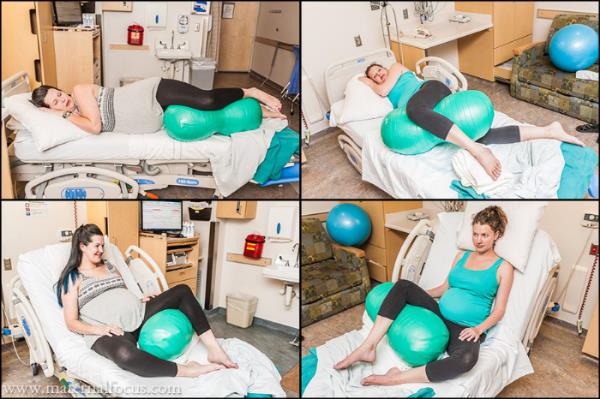
Using a Peanut Ball in Labor
From Director of Birthwell Birthright, Tanya Strusberg, comes an amazing article on the benefits of using a peanut ball versus pillows, blankets or even a traditional swiss ball. Specializing in Lamaze childbirth education, she is a great resource for natural birth techniques. We utilize the peanut at Embrace Birth Center and think it's an extremely useful tool for mothers to promote dilation and increase comfort.
What is a peanut ball and why could it be helpful for me in labour?
Most people are familiar with the standard birth ball (sometimes called a fit ball or Swiss ball). They come in a range of sizes to suit women of all heights and are without doubt an essential labour tool to have.
The standard round birth ball has become a common site in a birthing suite, but the peanut ball is a relative newcomer. In the last few years, the use of a peanut ball for labour has increased, especially for mums who choose an epidural or who need to rest. The peanut ball doesn’t slip, slide or flatten like pillows, keeping a mum’s legs properly supported and the pelvis open. The use of a peanut ball has been seen to help shorten labour. Although there has not been a large study on their effectiveness, many midwives and hospitals are seeing excellent results.
A peanut ball is similar to a birth ball, except that it dips in the middle, giving it its distinctive peanut shape. Peanut balls also come in a variety of sizes, again depending on a woman’s height, but also depending on how she plans to use it. Smaller peanut balls are designed to be used between your legs, whereas larger peanut balls are designed to be sat on, or to lean over.
Peanut Balls are typically used two ways primarily:
1. The labouring mother is in a semi-reclined position, with one leg over the ball, and the other leg to the side of the ball. The doula, midwife, or other support person pushes the ball as close to the mother’s hips as is tolerable for her. Many feel this position promotes dilation and descent with a well-positioned baby.
2. While the mother is in a side-lying or semi-prone position, the peanut ball is used to lift the upper leg and open the pelvic outlet. Many feel this position helps rotate a baby in a less-favorable posterior position to a more favorable position for delivery.
For the full article along with even more great resources, click here to visit the Birthwell Birthright website.
What is a peanut ball and why could it be helpful for me in labour?
Most people are familiar with the standard birth ball (sometimes called a fit ball or Swiss ball). They come in a range of sizes to suit women of all heights and are without doubt an essential labour tool to have.
The standard round birth ball has become a common site in a birthing suite, but the peanut ball is a relative newcomer. In the last few years, the use of a peanut ball for labour has increased, especially for mums who choose an epidural or who need to rest. The peanut ball doesn’t slip, slide or flatten like pillows, keeping a mum’s legs properly supported and the pelvis open. The use of a peanut ball has been seen to help shorten labour. Although there has not been a large study on their effectiveness, many midwives and hospitals are seeing excellent results.
A peanut ball is similar to a birth ball, except that it dips in the middle, giving it its distinctive peanut shape. Peanut balls also come in a variety of sizes, again depending on a woman’s height, but also depending on how she plans to use it. Smaller peanut balls are designed to be used between your legs, whereas larger peanut balls are designed to be sat on, or to lean over.
Peanut Balls are typically used two ways primarily:
1. The labouring mother is in a semi-reclined position, with one leg over the ball, and the other leg to the side of the ball. The doula, midwife, or other support person pushes the ball as close to the mother’s hips as is tolerable for her. Many feel this position promotes dilation and descent with a well-positioned baby.
2. While the mother is in a side-lying or semi-prone position, the peanut ball is used to lift the upper leg and open the pelvic outlet. Many feel this position helps rotate a baby in a less-favorable posterior position to a more favorable position for delivery.
What size peanut ball should I use?
Peanut balls come in a number of sizes:
45cm – Recommended for women who are under 160cms
50cm – Recommended for women who are 160cm – 170cms (most common size)
60cm – Recommended for women who are 174cm or taller or plus size women
70cm – ONLY to sit on and straddle
For the full article along with even more great resources, click here to visit the Birthwell Birthright website.
Thursday, May 12, 2016
Educating, Empowering & Encouraging Women from Pregnancy to Motherhood
Think about the first mother that ever walked the planet. Then think about the second, the third, and so on. All helping the other give birth from having lived through it themselves. Soon there was an abundance of mothers and babies who now make up the more than 7 Billion human population on this earth. Wow, what a thought.
Women have been giving birth since the dawn of human existence and we truly feel in our hearts, is an intuitive experience. All women know instinctively how to give birth. Midwifery has been practiced throughout the ages before there was medicine or hospitals. It has been practiced all over the world with varying traditions and expressed uniquely through local cultures. We believe that giving birth is a sacred experience not only for the mother and her family, but the community.
Advances in medicine, technology and science have led us to the practices we use today. Ultra-sounds find the position and the sex of the baby. We now know how to keep mothers healthy during their pregnancies with lots of heavy prenatal care bibles. There are vast hospital wings dedicated solely to pregnancy. But with all of this technology, we believe the advantages of using a midwife is giving the human, emotional, intuitive and physiological profoundness of birth it’s proper reverence.
We nurture the deeply connective mother and child bond through safe delivery practices that don’t separate you from your experience. Instead, we give you the power of choice by giving you all of our knowledge. We want to honor your traditions and listen to your wishes. We empower mothers!
Embrace midwives are highly trained, with a low tech, high touch mentality. Our goal at the Embrace Birth Center is to educate, empower and encourage women from pregnancy to motherhood!
Monday, May 9, 2016
Pelvic Floor Therapy Demystified
I wrote this article several years ago during the period when I saw a pelvic floor therapist. I still discuss pelvic floor therapy regularly and with everyone (yes neighbors too) with the hopes that more women will seek out this amazing option. Ask an Embrace Midwife for a recommendation or check out the links below!
-Kathryn Haines, CPM
Pelvic Floor Therapy Demystified
My amazing pelvic floor was not so amazing after carrying three babies. After my second baby, I managed to control and then stop occasional loss of urine by doing kegels. When I experienced urine loss after my third birth, I assumed that it was only a matter of time before I was dry again. As the months and then a full year went by, and I continued to change pad after pad after pad, I became concerned. A bottle of tea tree oil and vinegar by the toilet helped keep the odor away but there is something very discouraging about being incontinent when you are thirty-five.
At a visit with my local midwives (midwives are my go-to for well-woman care), Mairi and Erin asked if I had any other questions. I disclosed my incontinence and they said suggested I see a physical therapist who specializes in pelvic floors. A few weeks later I sat sheepishly in Pat Strott-Wheatley's office, marveling over the fact that I had been so busy taking care of my three little ones, my husband, and the house (not to mention midwifery!) that I had forgotten to take care of myself (sound familiar anyone?).
In the first visit, Pat mentioned that most people were able to stay dry 85% to 90% (or more) of the time upon faithful completion of pelvic floor therapy. The first week began with writing down everything I ate and drank as well as each trip to the toilet. The next assignment was to go to the toilet every hour in an attempt to stay dry. I was shocked to realize that I often couldn't even go one hour without leaking and I found it humorous how hard it was to pee every hour. Days at the pool were the most challenging. My eldest swims but not well enough to leave alone in a pool and of course I couldn't leave my three or one year old alone. So our daily routine went something like this. "Ok (for the fourth hour in a row) everyone, out of the pool (grumble, grumble, grumble, why mommy), mom has to pee!" Writing down the times I peed was another roadblock. Do you know how hard it is to pack for a family of five at the pool? Adding my "Bladder Diary" to the bag with the suits and swimmies and lotions and shampoos and plates and snacks just did not happen. Somehow I made it through the week.
At my second appointment, I was hooked up to a computer that measured how strong my kegels were, determined the extent to which I was relaxing between kegels and made sure I was using the appropriate muscles. I learned that while I kegeled well under the watchful eyes of Pat, at home I was not adequately relaxing between kegels. I was so focused on getting my kegels in that I was contracting beautifully, but not fully relaxing. Remember, biofeedback works! A hand on the belly reminds you to relax.
I also watched a movie on the amazing pelvic floor. Did you know that the urge to pee lasts 14 seconds and instead of rushing to the bathroom when you feel the urge (this makes you leak) you should first take a breath and kegel? Pat sent me home with new homework, pee every hour and a half and add pelvic floor exercises, three sets, contract for 8 seconds, relax for eight seconds.
Visit three, PROGRESS! The pelvic floor exercises were working! I was able to stay dry peeing every hour and a half and during a conference where I just couldn't slip out to pee, I found myself doing extra kegels and staying dry for about two hours! I noticed a few leaks that occurred when I had my morning latte and Pat suggested that I switch to half-caff (a painful switch but I am adjusting and you bet I will NOT be drinking half-caff at a birth.) I was hooked up to the computer again and the program detected that I had greatly increased the strength of my kegels in just one week! More homework. Pee every two hours and kegel four times a day, contract 10 seconds, relax ten seconds.
Week four. I forgot my sensor today and so I am scheduled for a final session in one month (probably a good thing as I will not slack on my kegels). The good news, when I kegel regularly (and appropriately!) I no longer leak! I will need to kegel for the rest of my life, and regularly (at least one set four times a day) but staying dry is worth the effort. And there are other benefits too! Developing strong pelvic floor muscles helps alleviate constipation and leads to better sex (among other things). If you are kegeling and it isn't working, I HIGHLY recommend visiting a physical therapist who specializes in pelvic floors. They will make sure you are kegeling properly, offer advice on how to kegel more effectively, and suggest things in your diet (like caffeine) that might be adding to the problem.
A disclaimer, I made a dramatic improvement in a short amount of time (four visits over the course of less than two months). This is because I had rather strong pelvic floor muscles at the start. It can take several months to see improvement and you have to be very diligent about doing your homework. If I don't kegel regularly, I leak, it is as simple as that.
I would love to see all midwives talk about the correct way to kegel (equal emphasis on relaxing as well as contracting) with their clients prenatally and post-partum. My gut feeling is that there are a lot of women out there who are incontinent and don't realize that a physical therapist can help you learn how to stay dry. I am a convert! Check out these websites to find a great pelvic floor therapist: https://hermanwallace.com/practitioner-directory, http://www.womenshealthapta.org/pt-locator/.
-Kathryn Haines, CPM
Pelvic Floor Therapy Demystified
My amazing pelvic floor was not so amazing after carrying three babies. After my second baby, I managed to control and then stop occasional loss of urine by doing kegels. When I experienced urine loss after my third birth, I assumed that it was only a matter of time before I was dry again. As the months and then a full year went by, and I continued to change pad after pad after pad, I became concerned. A bottle of tea tree oil and vinegar by the toilet helped keep the odor away but there is something very discouraging about being incontinent when you are thirty-five.
At a visit with my local midwives (midwives are my go-to for well-woman care), Mairi and Erin asked if I had any other questions. I disclosed my incontinence and they said suggested I see a physical therapist who specializes in pelvic floors. A few weeks later I sat sheepishly in Pat Strott-Wheatley's office, marveling over the fact that I had been so busy taking care of my three little ones, my husband, and the house (not to mention midwifery!) that I had forgotten to take care of myself (sound familiar anyone?).
In the first visit, Pat mentioned that most people were able to stay dry 85% to 90% (or more) of the time upon faithful completion of pelvic floor therapy. The first week began with writing down everything I ate and drank as well as each trip to the toilet. The next assignment was to go to the toilet every hour in an attempt to stay dry. I was shocked to realize that I often couldn't even go one hour without leaking and I found it humorous how hard it was to pee every hour. Days at the pool were the most challenging. My eldest swims but not well enough to leave alone in a pool and of course I couldn't leave my three or one year old alone. So our daily routine went something like this. "Ok (for the fourth hour in a row) everyone, out of the pool (grumble, grumble, grumble, why mommy), mom has to pee!" Writing down the times I peed was another roadblock. Do you know how hard it is to pack for a family of five at the pool? Adding my "Bladder Diary" to the bag with the suits and swimmies and lotions and shampoos and plates and snacks just did not happen. Somehow I made it through the week.
At my second appointment, I was hooked up to a computer that measured how strong my kegels were, determined the extent to which I was relaxing between kegels and made sure I was using the appropriate muscles. I learned that while I kegeled well under the watchful eyes of Pat, at home I was not adequately relaxing between kegels. I was so focused on getting my kegels in that I was contracting beautifully, but not fully relaxing. Remember, biofeedback works! A hand on the belly reminds you to relax.
I also watched a movie on the amazing pelvic floor. Did you know that the urge to pee lasts 14 seconds and instead of rushing to the bathroom when you feel the urge (this makes you leak) you should first take a breath and kegel? Pat sent me home with new homework, pee every hour and a half and add pelvic floor exercises, three sets, contract for 8 seconds, relax for eight seconds.
Visit three, PROGRESS! The pelvic floor exercises were working! I was able to stay dry peeing every hour and a half and during a conference where I just couldn't slip out to pee, I found myself doing extra kegels and staying dry for about two hours! I noticed a few leaks that occurred when I had my morning latte and Pat suggested that I switch to half-caff (a painful switch but I am adjusting and you bet I will NOT be drinking half-caff at a birth.) I was hooked up to the computer again and the program detected that I had greatly increased the strength of my kegels in just one week! More homework. Pee every two hours and kegel four times a day, contract 10 seconds, relax ten seconds.
Week four. I forgot my sensor today and so I am scheduled for a final session in one month (probably a good thing as I will not slack on my kegels). The good news, when I kegel regularly (and appropriately!) I no longer leak! I will need to kegel for the rest of my life, and regularly (at least one set four times a day) but staying dry is worth the effort. And there are other benefits too! Developing strong pelvic floor muscles helps alleviate constipation and leads to better sex (among other things). If you are kegeling and it isn't working, I HIGHLY recommend visiting a physical therapist who specializes in pelvic floors. They will make sure you are kegeling properly, offer advice on how to kegel more effectively, and suggest things in your diet (like caffeine) that might be adding to the problem.
A disclaimer, I made a dramatic improvement in a short amount of time (four visits over the course of less than two months). This is because I had rather strong pelvic floor muscles at the start. It can take several months to see improvement and you have to be very diligent about doing your homework. If I don't kegel regularly, I leak, it is as simple as that.
I would love to see all midwives talk about the correct way to kegel (equal emphasis on relaxing as well as contracting) with their clients prenatally and post-partum. My gut feeling is that there are a lot of women out there who are incontinent and don't realize that a physical therapist can help you learn how to stay dry. I am a convert! Check out these websites to find a great pelvic floor therapist: https://hermanwallace.com/practitioner-directory, http://www.womenshealthapta.org/pt-locator/.
Labels:
embrace birth center,
embrace birth va,
embracemidwifery,
incontinence,
kegel exercises,
kegels,
midwife,
pelvic floor therapy,
rva,
rvamidwives,
rvanews
Location:
Richmond, VA, USA
Tuesday, May 3, 2016
Catch Your Baby! One of the Benefits of Using a Midwife
Have you ever seen a mom catch her own baby? It is a sacred event. If you are pregnant, consider catching your own baby. Midwives LOVE to catch babies but consider this, it is your baby, and your birth, do you want to give up the extraordinary opportunity to let you or your partner's hands be the first to enfold your baby? If you need help, your midwife is at your side.
Photo Credit: Monet Nicole- Birthing Stories
Thursday, April 28, 2016
Nurture RVA Birth & Baby Fair
We are so happy to be participating in the first annual Nurture RVA Birth & Baby Fair on Saturday, May 7th from 10 am - 3 pm! We will be one of the presenters at the fair that Nurture RVA has so carefully put together. Meant to bring new and expecting families in touch with care providers, businesses, and organizations aimed at serving them, there will be lots of other educators covering topics such as breastfeeding, early parenting skills, and nutrition.
Come learn about us, Embrace Midwifery & Birth Care, as we venture to open our doors this May to all of Richmond's expecting and new families with our brand new Birth Center! As is the purpose of the event, we strive to provide Richmond families with the best care and improve well-being through education, fitness and support!
Pregnancy and Childbirth can be a scary transition, but through knowledge and social support, making informed decisions about your birthing plan doesn't have to be!
Join us along with some amazing organizations like Clover, Franklin Goose, Green Baby Planet, Goatocado, Dream On Baby, Relay Foods and SO many others!
Labels:
birth care,
birthing center,
embracebirth,
embracebirthva,
embracemidwifery,
new mothers,
nurture rva,
prenatal care,
rva,
rva families,
rvaevents,
rvanews
Location:
Richmond, VA, USA
Subscribe to:
Posts (Atom)