“Giving birth should be your greatest achievement not your greatest fear.”

~Jane Weideman

.

Birth is Sacred. It is powerful, and mysterious, and life changing. After your birth, you and your partner will never be the same. Babies who come into this world without medication or interference are better able to find their way to the breast and to latch on in that first important hour. They are born alert and ready to meet you face to face. Mothers who are educated about birth and trust their bodies and attendants are more likely to have a smooth birth experience, and feel empowered in doing so.
Showing posts with label embracebirthcenter. Show all posts

Wednesday, September 7, 2016

12th Annual RVA Peace Festival!


Join the 12th Annual RVA Peace Festival! Where diversity is celebrated and community is embraced.  Embrace Birth and Midwifery Care will have a table at this year's festival being held at St. Stephen's Episcopal Church!  This has historically been a wonderful event with a great mission:

 The mission of the annual RVA Peace Festival is to provide an opportunity for children, youth, and adults of the greater Richmond area to gather in celebration of peace and diversity.  It is our hope that this will foster a growing sense of community.  

Come by our table and sign up for our free drawing for our Embrace Botanicals, Balms for the Body, Salves for the Soul, Basket of Love!


Here is the schedule of events for all interesting in going, and you can find more information at their event page!

Schedule of Performances:

11:00 – 11:10: Opening Drumming Ceremony, Polly Lazaron
11:15 – 11:40: Sri Sai South Indian Dance Academy
11:45 – 12:10: Ebraheem Khabeer, Slam Poet
12:15 – 12:40: Prodigy Productions Music Group
12:45 – 1:00: Fire Ceremony, Greg Kelley

2:15 – 2:35: Interactive Dances of Universal Peace, Hayat Donna Bain
2:40 – 3:05: Drums No Guns, Ram Bhagat
3:10 – 3:35: Latin Ballet of Virginia
3:40 – 4:05: Falun Dafa Chinese Dancers
4:10 – 4:35: Cultural Libations Drama Production
4:45 – 5:00: Closing Ceremony

Exciting Exhibitions:

Mini Memoirs led by the Chrysalis Institute
Chalk for Peace, led by Art180
Healing Our Water
Meditation Labyrinth
Cooperative Games
Arts and Crafts

Wonderful Food:

La Milpa Mexican Cuisine – crafting in colorful Mexican food
Zainab’s – Middle Eastern Halal delicacy
Soul Ice -Premier Minority-owned and Certified Frozen Dessert Company
Ellwood Thompson’s – Locally-owned Market

Wednesday, July 20, 2016

To Push or Not To Push? Only you can answer that question!

The more research that goes into birth, the more we find out how instincts and natural intuition plays a role in successful birthing.  As a western culture we have grown accustom to doctors telling us how to care for our bodies as if it were separate from ourselves.  Ultimately, if we are in tune with our bodies, we can decide the right steps to take as long as we have access to good information!  That is our ultimate goal at Embrace Midwifery & Birth Center, to equip you with good information for you to make the best decision for yourself!  We believe all birth is beautiful and agree with Dr. Rachel Reed, the author of this wonderful article that, "a powerful, primal, loud and ‘out of control’ birth is just as amazing and valid as a gentle, quiet ‘in control’ birth."


Pushing: leave it to the experts
By Dr. Rachel Reed

A birthing woman is the expert regarding when and how she pushes. Providing directions implies she needs our guidance and we are the experts. Of course each woman and birth situation is different and in some circumstances guidance may be helpful for a woman. This post will examine the implications of telling women when to push, how to push and not to push during birth.

This post is based on part of a literature review I carried out for my PhD. You can find more information and the reference list in my Phd thesis (p.19 to 24) or on a research poster you can download here.

Telling women to push

There is overwhelming evidence that directed pushing results in increased morbidity for both mother and baby, and amongst other things is associated with: Mother – altering body fluid pH resulting in inefficient uterine contractions; maternal fatigue; and metabolic acidosis. Baby – interferes with the gradual descent and rotation and increases risk of hypoxia.

In addition directed pushing does not reduce the duration of the ‘second stage’. However it does result in the common scenario of: Woman is directed to push = baby becomes hypoxic and fetal heart rate abnormalities are heard… woman is shouted at to push harder to get her stressed baby out quickly… woman pushes harder… baby becomes more hypoxic and stressed… obstetrician is called in to rescue the baby and pull it out.

Telling women not to push

The cervical lip

The most common reason for telling a women not to push is that her cervix is not fully dilated. Often when a baby is in an occipito posterior position the woman will feel the urge to push before the cervix is completely open. She is then told not to push because the lip will swell up (and/or tear) and prevent the baby from descending. Not pushing is an almost impossible task and many women in this situation opt for, or are encouraged to have an epidural so they can stop pushing. The baby is then less likely to rotate into an anterior position because the pelvic floor tone is reduced and the woman is unable to move.

There is no evidence to support his notion of a swelling cervix and I am yet to encounter the situation as a result of  ‘premature pushing’. In some cultures it is tradition for the woman to push with each and every contraction from the beginning of labour. Surely these cultures would have died out if the outcome had been swollen/torn cervices and stuck babies. Studies (Borrelli, Locatelli & Nespoli 2013; Downe et al. 2008) have found that the incidence of ‘early pushing urge’ EPU (as it is referred to in the literature) is between 20% to 40% and is not associated with complications.

When we tell a woman not to push the message is ‘your body is not working correctly and is sending you the wrong messages – you need to fight against it’. Fighting her body until she is ‘allowed’ to push may result in difficulty switching into trusting and following her body once given the ‘go ahead’ (Bergstrom 1997). For more information about pushing and cervical lips see this post.

Breathe don’t push***

I need to breathe before I write this next bit as I am sure it will offend many – some of them my friends. So please feel free to comment and share your alternative views. Here goes… there seems to be a growing trend of telling women to resist their instinctive urge to push. The idea is to ‘breathe’ the baby down gently, and it does sound lovely. However, I have spoken to a number of women whose birth stories conveyed a sense of failure because they were unable to achieve this gentle ‘birth breathing’. I have also seen women attempting this during birth – struggling to breath upwards lightly to avoid the guttural downward pull of their body.

Hypnobirthing – the Mongan method seems to be one of the key advocates of this no-push technique and I recently read the book in an attempt to understand the approach. Overall the book has many positive messages for women about their innate ability to birth. However, I have concerns regarding some of the concepts (which I will blog about in the future) in particular ‘birth breathing’ . I agree that staff directed pushing is not good (see above) but I disagree with the following quote: “Often women speak of an overwhelming urge to push taking over. If this is felt it is also because of conditioning… our animal sisters elect to gently expel their babies” (Mongan 2005, p.129)

Pushing is physiological and instinctive, and a feature of all mammalian births. To tell a woman that if she pushes she has given in to external programming and her baby will not enjoy a gentle birth is disempowering – especially for those who fail to override their ‘conditioning’. A powerful, primal, loud and ‘out of control’ birth is just as amazing and valid as a gentle, quiet ‘in control’ birth.

***We strongly believe in choice, and while we are strong advocates of Hypnobirthing, we don't believe in edited or convenient information.  We have had an amazing success rate with our Hypno-mamas, and while we don't practice telling mothers when to push, we have too many amazing births and testimonies to reject its effectiveness and find that it does facilitate calmer births.

Suggestions for Midwives

Antenatally


  • Find out what the woman’s expectations are about this part of labour.
  • Reinforce her belief in her own innate ability to birth and explain that this is the reason you will not be telling her how and when to push. This is important as some women will interpret a lack of instructions as a lack of support if they are expecting to be told what to do (Anderson 2010; Parnell et al. 1993).
  • Encourage first time mothers to talk to other women and read birth stories written by birthing women. This will give her some idea about what it may feel like, and how different it is for each woman.
  • Show her ways to connect with her body and relax her pelvic tissues so that she can use this in labour if needed. 
  • If the woman is planning a hospital birth she will need to be prepared for hospital practices including directed pushing – a Doula and a birth plan can help. The Maternity Coalition have a good info sheet aimed at parents.

During birth


  • Avoid interfering with the physiological process ie. only do or say something if it is really necessary.
  • If the woman tells you she feels the urge to push, reassure her that this is good. Don’t tell her to push. There will come a point when she is pushing rather than feeling an urge to. Gloria Lemay has recorded an audio ‘pushing for first time mothers’ explaining why this is so important, especially for first time mothers.
  • If she is extremely tense and the baby is not descending encourage her to use the techniques she learned antenatally to relax her pelvic tissues and open.

In essence – telling women when to push, how to push or not to push contradicts the notion that women are the experts in their own births.

Pushing with an epidural

The information above is about physiological birth i.e. a woman birthing without intervention. An epidural can alter the ‘urge to push’ and prolong the descent of the baby once the cervix is open. An evidence based approach to pushing with an epidural is to wait until the baby’s head is visible i.e. is almost birthed. Then, if required, actively push to birth the baby… it should only take a few pushes. This approach reduces the chance of an instrumental delivery and decreases pushing time (Brancato et al. 2008). I have worked in a hospital where this was the standard approach and there was a lot less fetal distress and perineal trauma for women with epidurals.

It is also beneficial to help women with epidurals to get off their sacrum to increase pelvic space. So, semi-supine is perhaps the worst possible position. Many women can move and kneel or squat with an epidural – if not a side lying position allows the sacrum and coccyx to shift backwards.


For more great information and to read this article, visit MidwifeThinking.com

Tuesday, July 19, 2016

VBACs More Likely When You Call The Midwife!

We love finding new science that supports the effectiveness and practices of midwife-led births!  There are many reasons why vaginal births are preferred after a caesarean- from preventing ailments such as asthma or an impaired immune system to a lowered risk of type 2 diabetes.  The study found that the rates of VBAC were higher when a midwife was the main care provider.


Natural births after caesarean more likely if you call the midwife

Date: April 20, 2016

Source: Manchester University

Summary: Women who had a caesarean section in a previous pregnancy are much more likely to have a safer vaginal birth if their antenatal care is led by a midwife, according to a new study.


Women who had a caesarean section in a previous pregnancy are much more likely to have a safer vaginal birth if their antenatal care is led by a midwife, according to a new study from The University of Manchester.

Although caesarean sections are safe, research is increasingly showing that vaginal birth and labour protects against long term-risks such as impaired immune response, asthma, obesity and type 2 diabetes in the baby. As a result there is a growing emphasis placed by health authorities on promoting vaginal birth after caesarean (VBAC) where it is safe to do so.

The new Manchester study, published in the journal Birth, is the first to evaluate the influence on VBAC rates of midwife-led antenatal care as opposed to care led by an obstetrician.

Using patient records, 405 women giving birth at one hospital after a previous caesarean were examined in two groups. The first group was from 2008 when antenatal care was led by obstetricians and, following a change in hospital policy in 2009-2010, the second group was drawn from women who had received midwife-led antenatal care in 2011.

The number of women who intended to give birth by VBAC in 2011 was 90.3 percent, against 77 percent in 2008. Those who actually achieved VBAC was also higher in the midwife-led group with 61.2 percent instead of 46.9 percent. Both represented significant increases in VBAC when antenatal care was led by a midwife.

Dr Helen White, a midwifery lecturer in the University's School of Nursing, Midwifery and Social Work, led the research. She said: "There were few differences between the two groups of women we studied, so the main variance was the professional responsible for their care.

"Where it can be achieved safely, vaginal birth is preferable, but there's a real issue with women who have had a caesarean once, opting for the same again. There aren't many initiatives out there to break this cycle so this finding is important for providing evidence that midwives are best placed to promote vaginal birth."

The authors of the study are not proposing that women should reject caesarean birth when they are advised to do so, but suggest that midwives are important figures in promoting VBAC in suitable women.

There is a three year gap between the two groups of women but in terms of age, socio-economics, ethnic group and other variables, the groups are similar. The only significant change was the change in policy to midwife led care in the hospital. The results are also unlikely to be due to cultural changes over time as the VBAC rates across England more generally did not change during the study period.

Dr White added: "The more we understand the role of the microbes living in the vagina, the more we are uncovering the protective effects of labour and natural birth against conditions such as diabetes and obesity.

"Midwife led care is cost-effective and, if it safely reduces the number of repeat caesarean sections, then it's even more beneficial for mothers and babies."


For the full study, please visit ScienceDaily.com

Friday, July 15, 2016

Beginning the Birth Journey...A Community Class at Ellwood Thompson's

Corina Hossle will be speaking at The Beet Cafe community classroom at Ellwood Thompson's on Wednesday, August 3rd at 6:30pm for an educational hour about beginning the beautiful birth journey!


Join us as we Begin the Birth Journey…

From Conscious Conception through the First Trimester, the emotional, physical and spiritual well-being of both Mothers and Fathers impact their baby’s development and future…the cells that will create your baby are being nourished now!   Corina Hossle, Midwife and Birth Center Founder, will lead you through an informative and inspiring evening, giving you the tools you need to create an optimal pregnancy and birth.

While discussing the importance of preconception nutrition, we’ll cover simple and effective ways to increase your health.  Learn natural tricks to help you thrive— and not just survive, the physical changes and challenges of the first trimester.  Take away accurate and up-to-date information on the safety of herbs, homeopathics and essential oils during these critical first weeks of fetal development.

Partners are welcome!

This class is FREE!

Thursday, July 14, 2016

August Prenatal Yoga & Baby-Wearing Yoga Classes!

Jessica Turner is opening August registration for her amazing Prenatal and Baby Wearing Yoga Classes! Make sure to sign up today for one of the 4-week series that starts Saturday, August 6th!


Baby Wearing Yoga Series
4 Weeks in August, $60.
11:30 am - 12:30 pm
Current Dates: August 6, 13, 20, 27!
At Embrace Wellness Collective
124 Buford Road

Have fun with your baby!
Move your body!
Meet other mamas!

To register,  email Jessica Turner: jess.turner.yoga@gmail.com


Prenatal Yoga Series
4 Week Series in August, $60!
10:30 am - 11:30 am
Current Dates: August 6, 13, 20, 27!
At Embrace Wellness Collective
124 Buford Road

In prenatal yoga you can...
find relief from the discomforts of pregnancy
learn practical tools to aid in relaxation for a calm, engaged birth
practice physical postures (asana) for comfort and ease during labor and birth
explore the mind-body-breath connection
cultivate peace and positivity towards your body, your birth, and your baby
offer and receive wisdom amid a safe, non-judgmental community of mothers

EMAIL jess.turner.yoga@gmail.com TO REGISTER!

Wednesday, June 29, 2016

What is a Midwife?


We get asked all the time, "What is a midwife?"  Well, I'm here to answer the basics about what a midwife is...and isn't!


Monday, June 27, 2016

Top 10 Breastfeeing Problems Solved

From the bloggers at TheBump.com come the top 10 Breastfeeding difficulties and their solutions!  Our midwives at Embrace Birth Center are available to help you with all of your after-birth questions.  If you choose to use a Doula, which has SO many benefits, they are there to support you in the early stages of infant care.

Photo Credit: Very Important Date Photography

Top 10 Breastfeeding Problems Solved

It’s a natural process so it should be easy, right? But just like learning how to ride a bike, you need to learn how to breastfeed (and so does baby, by the way). We consulted with Jane Morton, MD, on how to handle the 10 most common breastfeeding problems.  She should know — she’s been teaching doctors, nurses, and lactation consultants how to teach the rest of us for more than 30 years. And she’s on staff at Lucile Packard Children’s Hospital at Stanford in Palo Alto, California.

Problem #1: Latching pain
It’s normal for your nipples to feel sore when you first start to breastfeed, especially if you’re a first-timer. But if baby has latched and the pain lasts longer than a minute into your feeding session, check the positioning.

Solution: Try to achieve an asymmetrical latch where baby’s mouth covers more of the areola below the nipple rather than above. To reposition him, place your index finger inside baby’s mouth to take him off your breast. Tickle his chin or wait until he yawns so his mouth is wide open and seize your opportunity. (Sandwich the breast as described in the video clip below to shape it to the baby’s mouth.) When he is correctly positioned, his chin and nose touch your breast, his lips splay out and you can’t see your nipple or part of the lower areola.

If baby’s position is correct and latching on still hurts, your nipples may be dry. Make sure to wear loose clothing and avoid washing with soap. Lanolin-based creams are good for applying between feedings.

Problem #2: Cracked nipples
Cracked nipples can be the result of many different things: thrush (see #6), dry skin, pumping improperly, or most likely, latching problems. During the first week of breastfeeding, you may have bloody discharge when your baby is just learning to latch or you are just beginning to pump. A little blood, while kind of gross, won’t harm baby.

Solution: Check baby’s positioning — the bottom part of your areola underneath your nipple should be in baby’s mouth. Also, try breastfeeding more frequently, and at shorter intervals. The less hungry baby is, the softer his sucking will be.
As tempting as it is to treat your cracked nipples with anything you can find in your medicine cabinet, soaps, alcohol, lotions, and perfumes are no good — clean water is all you need to wash with. Try letting some milk stay on your nipples to air dry after feeding (the milk actually helps heal them). You can also try taking a mild painkiller like acetaminophen or ibuprofen 30 minutes before nursing. If all this fails, try an over-the-counter lanolin cream, specially made for nursing mothers and use plastic hard breast shells inside your bra.

Problem #3: Clogged/plugged ducts
Ducts clog because your milk isn’t draining completely. You may notice a hard lump on your breast or soreness to the touch and even some redness. If you start feeling feverish and achy, that’s a sign of infection and you should see your doctor. Most importantly try not to have long stretches in between feedings — milk needs to be expressed often. A nursing bra that is too tight can also cause clogged ducts. Stress (something all new mommies have an overabundance of) can also affect your milk flow.

Solution: Do your best to get adequate rest (you should recruit your partner to pick up some slack when possible). Also, try applying warm compresses to your breasts and massage them to stimulate milk movement.

Clogged ducts are not harmful to your baby because breastmilk has natural antibiotics. That said, there’s no reason why you have to suffer. Breastfeeding should be enjoyable for mom and baby.

Problem #4: Engorgement/high milk supply
Engorgement makes it difficult for baby to latch on to the breast because it’s hard and un-conforming to his mouth.

Solution: Try hand-expressing a little before feeding to get the milk flowing and soften the breast, making it easier for baby to latch and access milk. Of course, the more you nurse, the less likely your breasts are to get engorged.

Problem #5: Mastitis
Mastitis is a bacterial infection in your breasts marked by flu-like symptoms such as fever and pain in your breasts. It’s common within the first few weeks after birth (though it can also happen during weaning) and is caused by cracked skin, clogged milk ducts, or engorgement.

Solution: The only sufficient way to treat the infection is with antibiotics, hot compresses, and most importantly, frequent emptying. Use hands-on pumping, making sure the red firm areas of the breast and the periphery are softened. It’s safe and actually recommended that you continue breastfeeding when you have mastitis.

Problem #6: Thrush
Thrush is a yeast infection in your baby’s mouth, which can also spread to your breasts. It causes incessant itchiness, soreness, and sometimes a rash.

Solution: Your doctor will need to give you antifungal medication to put on your nipple and in baby’s mouth — if you’re not both treated at the same time, you can give each other the fungi and prolong healing.

Problem #7: Low milk supply
Breastfeeding is a supply-and-demand process. If your doctor is concerned about baby’s weight gain, and he is being plotted on the World Health Organization curves designed for breastfeeding babies, this may be the problem.

Solution: Frequent nursing and hands-on pumping during the day can help increase milk supply. Surprisingly, forcing fluids and eating more calories or different foods hasn’t been shown to increase milk production.

Problem #8: Baby sleeping at breast
Baby is sleepy in the first couple of months after birth (hey, he’s been through a lot) so falling asleep while nursing is common. All that bonding makes baby relaxed!

Solution: Milk flow is fastest after your first let-down, so if you want to increase efficiency, start off at the fuller breast, then switch to the other breast sooner, rather than later. When you notice baby’s sucking slowing down and his eyes closing, remove him from your breast and try to stimulate him by burping, tickling his feet, or gently talking to him while rubbing his back, and then switch breasts. As baby gets older he’ll be able to stay awake longer, so don’t fret.

Problem #9: Inverted/flat nipples
You can tell if you have flat or inverted nipples by doing a simple squeeze test:  Gently grab your areola with your thumb and index finger — if your nipple retracts rather than protrudes, you’ve got a problem, Houston. Not really. But breastfeeding will be more challenging.

Solution: Use a pump to get the milk flowing before placing baby at your nipple and use breast shells between feeds. Once you feel like your milk supply is adequate, try using nipple shields if baby still has problems latching.

Problem #10: Painful/overactive let down
Your breast is like a machine — when you let down, all the milk-producing engines constrict to move the milk forward and out of your nipple. Sometimes the working of these inner parts can hurt, especially when in overdrive. Some mothers feel a prickly pins-and-needles sensation and others just get an achy feeling.

Solution: If this feeling of pins and needles goes beyond a mere tingling and feels more like a hundred little daggers poking your breasts, you need to check for a breast infection (yeast or bacteria). Sometimes this pain develops when you have an excessive amount of milk. Try feeding baby longer on one particular breast and switching to the other only if you need to. If the result is an infection (fever, aches, and chills may be present), you’ll need to get antibiotics from your doctor. No matter how unpleasant it is for you, it’s still safe for baby to nurse.

By Dara Pettinelli

To view the original article, click here.

Wednesday, June 22, 2016

Partner-led Massage Class at Embrace Wellness Collective


How are you and your partner spending your Saturday evening?  Why not spend "date night" learning how to support your pregnant partner through prenatal massage?  Licensed massage therapist Brandon Slater will be hosting a free class at Embrace Birth Center's Wellness Collective on Saturday, June 25th at 6pm to guide you through safe and effective massage techniques.


Thursday, June 16, 2016

Chemical Free Options for Pregnancy, Babies & Children - Essential Oils Class!


So many families want to be chemical-free, organic, holistic, local and all of the above!  But, unfortunately, not everyone has the time to do all the research and sourcing that goes behind such an intentional lifestyle.  That's why we've created our Chemical Free Options for Pregnancy, Babies & Children class! Whether you are expecting or have a new baby, toddler, or young child at home, there are special considerations you want to make when it comes to your bundle of joy and the use of natural and chemical-free options. We can help you find some great essential oils for different needs, including understanding important safety concerns.  Dora Doyle, our expert at Young Living and co-founder of Heathier Oil the Thyme, will be giving tips, advice and recommendations for using essential oils to enhance your daily life.

When: Friday, June 17th from 7 pm - 8 pm
Where: Embrace Midwifery Care & Birth Center
         
              124 Buford Rd.
              North Chesterfield, VA 23235


For more information or to RSVP, email: Heathieroilthethyme@gmail.com or call (804)385-9455

Those that RSVP will receive a free gift, although it is not required to attend!

Thursday, June 2, 2016

Hypno- Birthing Classes!

I fell in love with HypnoBirthing in Trinidad and Tobago, but tonight I am sitting with another first time mom who is close to transition and still smiling and peacefully chatting between contractions. If you are a first, or second, time mama who is getting ready to have a baby, give us a call and let us connect you with Hypnobirthing! Classes available starting this month!


Visit JoyfulBirthRVA.com for more info!

What is HypnoBirthing?

HypnoBirthing is a tried and proven method that guides and prepares a woman in giving birth in a peaceful and extraordinarily beautiful manner.  It is a program  that considers the psychological, as  well as the physical, well-being of the mother, her birth partner, and the newborn, independent of context, whether that be in the quiet of a home, a hospital, or a birth center.

The HypnoBirthing program is built around an educational process that includes special breathing, relaxation, visualization, meditative practice, attention to nutrition and positive body toning. Most importantly it fosters an air of mutual respect for the birthing family, as well as the health-care provider in a traditional health-care system or an alternative setting.

Class Specifics

5 classes last approximately 2 ½ hours each.  Group class sizes are limited to ensure comfort, understanding, and well monitored hypnotic sessions.  The cost of HypnoBirthing classes includes a book, 2 CDs, and numerous handouts for essential home practice.  

Unless specified otherwise, classes are held at the HypnoBirthing studio at 8401 Mayland Drive, Suite C, Henrico VA 23294

If a class is listed, vacant seats remain

Upcoming HypnoBirthing class series are beginning on:

***Tuesday June 7th 7:00pm - 9:30pm weekly, ending on July 5th*** This series is for families that are planning to birth outside of a hospital and will be held at Embrace Midwifery Resource Center.  To sign-up please visit: http://www.embracebirthva.org/ 

Sunday July 10th 2:00pm - 4:30pm weekly, ending on August 7th

Thursday August 4th 7:00pm - 9:30pm weekly, ending on September 8th *There will not be a class on August 18th*

Saturday September 10th 10:00 - 12:30 weekly, ending on October 15th

Thursday October 13th 7:00 - 9:30pm weekly, ending on November 10th


If these times do not suit you, we can work together to find ones that do.  Please register in advance by paying the class deposit and leaving a "note to seller" stating which class time you are signing up for.  From there I will contact you with additional details.  I would love to work with your family to bring about the most satisfying birth experience possible!

Thursday, May 26, 2016

Keep Calm & Just Be

From the SmartMoms Blog is really good advice on gaining perspective when you're expecting.  Not so much about nutritional health, but maintaining you sanity and keeping yourself grounded throughout YOUR pregnancy!  It's your experience, your intuition, your body and we fully support that outlook!


Health During Pregnancy: 9 Tips for Expectant Moms

If you’re reading this, most likely you’re already or soon to be pregnant.  And if that’s the case, I’m pretty confident this isn’t the first post you’ve read about how to maintain optimal health during pregnancy.

Beyond that, I would imagine that you have had conversations with your medical professionals about how to maintain health during pregnancy for you and your unborn child.  Here we have a few “less traditional” pieces of advice for staying in great health during pregnancy.

Tune Out the Advice

Obviously, listen to your medical professional’s advice about how to keep your healthy during pregnancy strong, but beyond that, try to turn down the volume from outside observers.  These people do have the best intentions, but you are going through a significant event in your life and should therefore be treated as such: sacred.

Take a break from the parenting blogs (I realize the irony here), put down the pregnancy books and tell your mother-in-law that you have another call coming in.  No matter what, there will always be things you look back on and wish you had known, and that’s all part of the process. Just breathe.

Tune up Your Intuition

When I was pregnant with my son, I really tried to connect with my own inner sense of what felt good and what did not.  If I was feeling tired, I slept.  If I was feeling energetic, I went to the gym.  If I was hungry for a second bowl of cereal, I went for it.  Our bodies know how to do this, and if we listen, they will tell us what we need.

Walk

I exercised throughout my pregnancy, but the only physical activity that I would come to with joy on a daily basis was walking.  My husband and I took long walks with our dog every day and I have to admit these walks were not only great for our relationship, but also prepared me for the insane amount of walking I would do during labor as well as following the birth of our son (walking was one of the only reliable ways to get him to fall asleep).

Eat Nourishing Food

I definitely indulged when I was pregnant, but I never felt more convicted to eat for healthy during pregnancy. I was keenly aware that every bite I took would nourish my son, so I wanted to make sure it was worthy.   Eat fruits, and vegetables, and grains, and healthy fats.   Consider your eating habits during pregnancy your first opportunity to show your child what a healthy diet looks like.

Prioritize the Health of Your Relationship

I know the constant advice of “Go on a date because you will NEVER BE ALONE AGAIN” gets old, but putting some extra effort into your relationship prior to the addition of a child is important.   The most stressful and trying moments of my relationship with my husband came about at 3:00 in the morning over the screams of our son.   Had we not had the foundation of a healthy relationship to fall back on, I’m not sure we would have been able to weather that storm.

Stretch

I purchased a prenatal yoga video within minutes of finding out I was pregnant.   Now granted, prenatal yoga is VERY different when you are four weeks pregnant instead of 40 weeks, but there was nothing more blissful than gentle stretching towards the end of pregnancy.  Once again, listen to your intuition and only do the poses that feel good, but when they do, stick with them.   Spend hours in them if you like.

Rest

This is easier said than done, but whenever you can, grab some shut eye.   So much generative growth happens during sleep (I mean, babies sleep 90% of the day when they are newborns, and you see how fast they grow??), so allowing your body to sleep when it can not only helps you, but helps your baby’s growth and health during pregnancy.

If you can’t sleep in long stretches due to discomfort, do it in spurts.  Invest in a pregnancy pillow.   Create a space completely designated for restorative rest and spend as much time there as you can.  And if you fall asleep while watching movies, that’s okay too.

Hydrate

Once again, you probably already know this, but your body needs water.  Beyond the fact that it’s crucially important to keep hydrated for health during pregnancy, this sets the stage for healthy habits after the birth of your child.

If you choose to breastfeed after the baby is born, you need to doubly hydrate because your body is literally losing a large amount of liquid each feeding.  My doctor told me that with each feeding, I should drink 10 oz. of water to replace what I was losing and that this would help me have more patience with my husband/dog/cable guy etc.  It seriously worked.  I had no idea being dehydrated could have such an impact on my patience, but that was the best advice I’ve ever received.

Love

Love the baby.  Love your partner.  Love the world.  Love yourself.  The world is a scary place and sometimes the thought of bringing a baby into it can be terrifying.  One of the best ways to maintain your sanity and mental health is to practice gratitude and take time to express love to those around you.  It may not create peace in the Middle East (yet), but it will create a happier home for which to welcome your new child.   Above all, love.

Wednesday, May 25, 2016

Coping With Breastfeeding Grief

Author of Healing Breast Feeding Greif, Hilary Jacobson, writes about how to heal disappointed expectations when breastfeeding doesn't work out for some women.  As a holistic lactation consultant, she works with many women who have trouble breastfeeding and experienced the same grief after her first child.


Breastfeeding Grief: Emotional Healing When Breastfeeding Does Not Work
By Hilary Jacobson

Recently, I read in a book about natural childbirth that mothers should prepare mentally ahead of time just in case a Cesarean birth is needed. The authors point out that when we accept that life is not predictable and are mentally prepared for any eventuality, a mother can maintain a positive sense of connection to her baby even without her ideal birth.

When it comes to breastfeeding, we do not advise mothers about what to do in case breastfeeding does not work out. We know that with correct information, guidance, and support, mothers usually succeed and we do not want to discourage mothers by suggesting difficulties that will most likely never arise.

Yet, where does this leave those mothers who, for whatever reason, are not able to have their hoped-for relationship?

A 2014 study from Cambridge, looking at 14,000 mothers, revealed that mothers who do not reach their breastfeeding goals are at twice the risk of postpartum depression. The head author of that study, Marie Iacovou, says, “There is currently hardly any skilled specialist help for these mothers, and this is something … that health providers should be thinking about.”

Helping mothers truly heal their emotional wounds is something I have been thinking about for a long time. As the moderator of an online group for mothers with chronic low milk supply, I have heard hundreds if not thousands of heartbreaking stories. More personally, I went through breastfeeding grief after the birth of my first child, and it was the healing of that wound that motivated my research and outreach in subsequent decades.

What I learned is that mothers need what I call a “pivotal moment” in which they feel supported with compassion and understanding, and can be directed to focus on their capacity to love their baby, regardless how they feed. If mothers do not receive a pivotal moment of compassion, but instead sense that their feelings or problems are judged, or trivialized, their grief can deepen and become entrenched.

The good news is that even if the grief/trauma has become entrenched, it can still resolve and mothers can heal. Today, scientists are discovering the remarkable benefits of mindfulness meditation for posttraumatic stress, and also the benefits of stress relief through relaxation and visualization. Scientists are recognizing, too, that the brain and the emotions are much more malleable than previously suspected. Our thoughts and feelings can be permanently redirected in positive ways, and relatively quickly, too. All of this explains why techniques used in hypnotherapy, somatic therapy, cognitive behavioral therapy, and coaching are frequently so effective—and they are effective for mothers, too.

To read the full article, including excerpts from her book, click here.

Monday, May 23, 2016

Orgasm During Childbirth?

It may be a rainy Monday, but we come bearing good news- at least for the lucky 6% of you! Multiple sources have credited this phenomenon of orgasm during childbirth and this doula, Bailey Gaddis has witnessed it herself! Below are tips on how to facilitate such an experience, so read on and may you be blessed!


I'm A Doula, and Let Me Tell You: Orgasms During Childbirth are a Real Thing!
By: Bailey Gaddis

The terms “orgasm” and “childbirth” sound like antonyms to most people. But, women have an orgasm when they conceive a baby (hopefully!), so maybe it’s not outside the realm of reason that they could have an orgasm while birthing the baby.

According to The Independent, a survey by the Positive Birth Movement and Channel Mum has reported that 6 percent of women say they have had an orgasm during childbirth. My initial reaction when I first heard about women who reported orgasms during birth was that they were lying braggarts — mainly because I was jealous I had never experienced this phenomenon.

But since I’ve become a birth doula, my “lying braggart” theory has been crushed; I’ve witnessed many women experience multiple orgasms during birth. I’ve heard them describe these births as “ecstatic overflows,” “spiritual awakenings,” “waves of bliss,” and “the longest, strongest, orgasm ever!”

I wonder if these will be the ladies that end up having six children?

This miracle outcome is not based in fantasy, but in science. Studies have shown that two of the regions in the brain (the anterior cingulate cortex and insula) that are active during orgasm are also active during painful sensations — and childbirth is often labeled the pinnacle of painful experiences.

Beyond similar activities in the brain, orgasm and childbirth both produce strong surges of blood and stimulation of the birth passage, cervix, clitoris, and vagina. And sometimes, they both involve the partner whispering sweet somethings in the mother’s ear — or, teetering on the edge of sleep.

A professor of psychology at Rutgers University, Barry Komisaruk says, “Anatomically, orgasmic birth is no surprise. In fact, the intense stimulation of the vaginal canal in childbirth may work to block pain, whether that stimulation is felt as sexual or not.”

Are you hoping for an orgasm during childbirth? Why not, right? Try out these suggestions to up your chances:


  • Substitute the term “contractions” (it sounds so constrictive!) with the term “surges” — which sends a more fluid and pleasurable message from the mind to the body.
  • Take deep-in-the-belly breaths during each surge, allowing the belly to fully rise. Breathe past the wall of pain, and you might just find a special treat on the other side.
  • Envision a spiral of energy moving from above your head, down through your body, and concentrating its power as it moves out your cervix and washes over your vagina and clitoris. Imagine that energy waking up your body’s endorphins as it moves down, and dispersing them through the pelvic region.
  • Submerge yourself in warm water as much as possible. The relief warm water provides to your hard-working birthing muscles creates space for them to focus on more pleasurable pursuits.
  • When you feel yourself at the tipping point of pain and pleasure, let out long and low groans to allow any painful energy to be released.
  • Have your partner stimulate your nipples during surges. This act pumps up your release of oxytocin, which can strengthen your surges — increasing the potential of a quicker birth, and awakened arousal.
  • Ask your partner (or self!) to stimulate your clitoris. In 1988, Barry Komisaruk and co-researchers published a study in the Journal of Sex Research, which noted that vaginal or clitoral stimulation made women less sensitive to painful stimulation.

I imagine women have been experiencing orgasmic births since the beginning of humankind, but have likely been sticking to the motto “mum’s the word.” Now that sexuality is losing a bit of its taboo status, more women are coming forward about their ecstatic birth experiences.

Hopefully, the sharing of this possibility can spark renewed hope (maybe even excitement!) in women who are terrified of the prospect of birth, and removes the belief that there is shame in a woman feeling bursts of pleasure in an experience where pain is the standard.

Maybe, childbirth can hurt so good.

Tuesday, May 17, 2016

Using a Peanut Ball in Labor

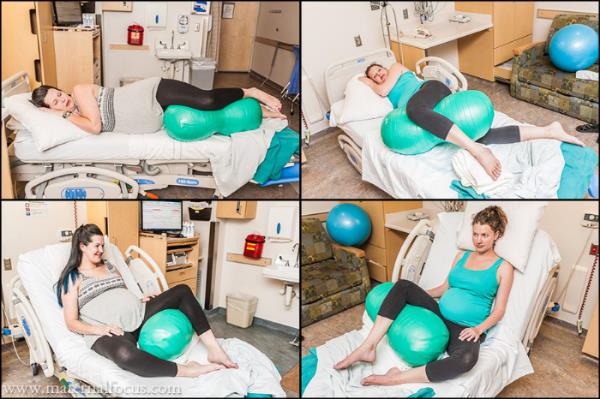
From Director of Birthwell Birthright, Tanya Strusberg, comes an amazing article on the benefits of using a peanut ball versus pillows, blankets or even a traditional swiss ball.  Specializing in Lamaze childbirth education, she is a great resource for natural birth techniques.  We utilize the peanut at Embrace Birth Center and think it's an extremely useful tool for mothers to promote dilation and increase comfort.


What is a peanut ball and why could it be helpful for me in labour?

Most people are familiar with the standard birth ball (sometimes called a fit ball or Swiss ball). They come in a range of sizes to suit women of all heights and are without doubt an essential labour tool to have.

The standard round birth ball has become a common site in a birthing suite, but the peanut ball is a relative newcomer.  In the last few years, the use of a peanut ball for labour has increased, especially for mums who choose an epidural or who need to rest. The peanut ball doesn’t slip, slide or flatten like pillows, keeping a mum’s legs properly supported and the pelvis open. The use of a peanut ball has been seen to help shorten labour. Although there has not been a large study on their effectiveness, many midwives and hospitals are seeing excellent results.

A peanut ball is similar to a birth ball, except that it dips in the middle, giving it its distinctive peanut shape. Peanut balls also come in a variety of sizes, again depending on a woman’s height, but also depending on how she plans to use it. Smaller peanut balls are designed to be used between your legs, whereas larger peanut balls are designed to be sat on, or to lean over.


Peanut Balls are typically used two ways primarily:

1. The labouring mother is in a semi-reclined position, with one leg over the ball, and the other leg to the side of the ball. The doula, midwife, or other support person pushes the ball as close to the mother’s hips as is tolerable for her. Many feel this position promotes dilation and descent with a well-positioned baby.

2. While the mother is in a side-lying or semi-prone position, the peanut ball is used to lift the upper leg and open the pelvic outlet. Many feel this position helps rotate a baby in a less-favorable posterior position to a more favorable position for delivery.


What size peanut ball should I use?

Peanut balls come in a number of sizes:

45cm – Recommended for women who are under 160cms
50cm – Recommended for women who are 160cm – 170cms (most common size)
60cm – Recommended for women who are 174cm or taller or plus size women
70cm – ONLY to sit on and straddle


For the full article along with even more great resources, click here to visit the Birthwell Birthright website.

Monday, May 16, 2016

Grand Opening Success! Take a Peek Inside

We had such a lovely time at our Grand Opening yesterday!  It was a successful event and we were so thrilled to be hosting amazing moms, expecting mothers, their partners, and their children!  It was all around joyful to be sharing something that we have been working so hard towards these past few months and seeing it all come to fruition.  Embrace Birth Center is up and running along with our Wellness Collective!  If you didn't get a chance to visit us yesterday, here's a peek at what's inside!

 Welcome to our Birth Center!  Our very own Kathryn Haines is speaking to expecting parents in the Midwives meeting room!

Here we have everyone gathered in one of our birthing suites, along with our examination room and our sitting area at the front entrance.  The photography you see around the office are all works of local photographers you can work with for your very own pregnancy and infancy portraiture!  The collection shown here is of actual births we've performed in Richmond.

This is one of our amazing birth suites, built with maximum comfort in mind.  A space for your family - a retreat - with extra deep soaking tubs, plush linens, and private bathrooms!

We are very excited about this little tree!  We will be hanging snaps of all the beautiful babies we deliver on its branches!  Blue for water babies, green for earth babies!

Our Wellness collective features Green Baby Planet, who focuses on safe, natural and eco-friendly products for your little ones!  We also offer prenatal yoga classes!  There is still room available in our collective, so if you'd love to contribute to this wonderful community of support, please contact us.


Thursday, May 12, 2016

Educating, Empowering & Encouraging Women from Pregnancy to Motherhood


Think about the first mother that ever walked the planet.  Then think about the second, the third, and so on. All helping the other give birth from having lived through it themselves. Soon there was an abundance of mothers and babies who now make up the more than 7 Billion human population on this earth. Wow, what a thought.

Women have been giving birth since the dawn of human existence and we truly feel in our hearts, is an intuitive experience.  All women know instinctively how to give birth. Midwifery has been practiced throughout the ages before there was medicine or hospitals.  It has been practiced all over the world with varying traditions and expressed uniquely through local cultures. We believe that giving birth is a sacred experience not only for the mother and her family, but the community.

Advances in medicine, technology and science have led us to the practices we use today. Ultra-sounds find the position and the sex of the baby.  We now know how to keep mothers healthy during their pregnancies with lots of heavy prenatal care bibles. There are vast hospital wings dedicated solely to pregnancy.  But with all of this technology, we believe the advantages of using a midwife is giving the human, emotional, intuitive and physiological profoundness of birth it’s proper reverence.


We nurture the deeply connective mother and child bond through safe delivery practices that don’t separate you from your experience. Instead, we give you the power of choice by giving you all of our knowledge.  We want to honor your traditions and listen to your wishes. We empower mothers!


Embrace midwives are highly trained, with a low tech, high touch mentality.  Our goal at the Embrace Birth Center is to educate, empower and encourage women from pregnancy to motherhood!   


Tuesday, May 3, 2016

Just Some of the Benefits of Water Birth


“Do you perform water births?” is one of the most frequently asked questions we get and what the majority of mothers that come to us are looking for.  We recommend that all our mothers at least consider laboring in water, but are happy to deliver earth babies as well! When you think about the environment your baby has spent the last 9 months in, that warm, amniotic fluid— giving birth in water seems natural.  It makes your baby’s transition from that environment into the loud and bright outside environment that much easier.  The decreased sensation of gravity also makes positioning for the mother less strenuous in water and promotes.  Some of the well-known benefits of water birth include:

— Decreasing pain 
— Decreasing length of labor
— Conservation of energy
— Reduces perineal trauma
— Relaxes and soothes mother to get in tune with her natural rhythm


Our new Birth Center will be opening this Tuesday, May 10th, with our Grand Opening Event and Open House on Sunday, May 15th!  It will feature 2 beautiful water birth suites that meet all of the American Association of Birth Center guidelines, extra deep soaking tubs, private bathrooms, showers and queen-size beds.  All of the comforts of home.

Catch Your Baby! One of the Benefits of Using a Midwife

Have you ever seen a mom catch her own baby? It is a sacred event. If you are pregnant, consider catching your own baby. Midwives LOVE to catch babies but consider this, it is your baby, and your birth, do you want to give up the extraordinary opportunity to let you or your partner's hands be the first to enfold your baby? If you need help, your midwife is at your side.

Photo Credit: Monet Nicole- Birthing Stories