“Giving birth should be your greatest achievement not your greatest fear.”

~Jane Weideman

.

Birth is Sacred. It is powerful, and mysterious, and life changing. After your birth, you and your partner will never be the same. Babies who come into this world without medication or interference are better able to find their way to the breast and to latch on in that first important hour. They are born alert and ready to meet you face to face. Mothers who are educated about birth and trust their bodies and attendants are more likely to have a smooth birth experience, and feel empowered in doing so.

Tuesday, May 31, 2016

Our First Baby....! ❤❤❤


Drum Roll Please! Embrace Midwifery Care & Birth Center would like to announce our First Baby! 
Miss Willow was born after an amazing journey of strength, bravery, commitment, and love... 
I am so thankful to have a team that loves this work and is excellent at what they do!

Thursday, May 26, 2016

Keep Calm & Just Be

From the SmartMoms Blog is really good advice on gaining perspective when you're expecting.  Not so much about nutritional health, but maintaining you sanity and keeping yourself grounded throughout YOUR pregnancy!  It's your experience, your intuition, your body and we fully support that outlook!


Health During Pregnancy: 9 Tips for Expectant Moms

If you’re reading this, most likely you’re already or soon to be pregnant.  And if that’s the case, I’m pretty confident this isn’t the first post you’ve read about how to maintain optimal health during pregnancy.

Beyond that, I would imagine that you have had conversations with your medical professionals about how to maintain health during pregnancy for you and your unborn child.  Here we have a few “less traditional” pieces of advice for staying in great health during pregnancy.

Tune Out the Advice

Obviously, listen to your medical professional’s advice about how to keep your healthy during pregnancy strong, but beyond that, try to turn down the volume from outside observers.  These people do have the best intentions, but you are going through a significant event in your life and should therefore be treated as such: sacred.

Take a break from the parenting blogs (I realize the irony here), put down the pregnancy books and tell your mother-in-law that you have another call coming in.  No matter what, there will always be things you look back on and wish you had known, and that’s all part of the process. Just breathe.

Tune up Your Intuition

When I was pregnant with my son, I really tried to connect with my own inner sense of what felt good and what did not.  If I was feeling tired, I slept.  If I was feeling energetic, I went to the gym.  If I was hungry for a second bowl of cereal, I went for it.  Our bodies know how to do this, and if we listen, they will tell us what we need.

Walk

I exercised throughout my pregnancy, but the only physical activity that I would come to with joy on a daily basis was walking.  My husband and I took long walks with our dog every day and I have to admit these walks were not only great for our relationship, but also prepared me for the insane amount of walking I would do during labor as well as following the birth of our son (walking was one of the only reliable ways to get him to fall asleep).

Eat Nourishing Food

I definitely indulged when I was pregnant, but I never felt more convicted to eat for healthy during pregnancy. I was keenly aware that every bite I took would nourish my son, so I wanted to make sure it was worthy.   Eat fruits, and vegetables, and grains, and healthy fats.   Consider your eating habits during pregnancy your first opportunity to show your child what a healthy diet looks like.

Prioritize the Health of Your Relationship

I know the constant advice of “Go on a date because you will NEVER BE ALONE AGAIN” gets old, but putting some extra effort into your relationship prior to the addition of a child is important.   The most stressful and trying moments of my relationship with my husband came about at 3:00 in the morning over the screams of our son.   Had we not had the foundation of a healthy relationship to fall back on, I’m not sure we would have been able to weather that storm.

Stretch

I purchased a prenatal yoga video within minutes of finding out I was pregnant.   Now granted, prenatal yoga is VERY different when you are four weeks pregnant instead of 40 weeks, but there was nothing more blissful than gentle stretching towards the end of pregnancy.  Once again, listen to your intuition and only do the poses that feel good, but when they do, stick with them.   Spend hours in them if you like.

Rest

This is easier said than done, but whenever you can, grab some shut eye.   So much generative growth happens during sleep (I mean, babies sleep 90% of the day when they are newborns, and you see how fast they grow??), so allowing your body to sleep when it can not only helps you, but helps your baby’s growth and health during pregnancy.

If you can’t sleep in long stretches due to discomfort, do it in spurts.  Invest in a pregnancy pillow.   Create a space completely designated for restorative rest and spend as much time there as you can.  And if you fall asleep while watching movies, that’s okay too.

Hydrate

Once again, you probably already know this, but your body needs water.  Beyond the fact that it’s crucially important to keep hydrated for health during pregnancy, this sets the stage for healthy habits after the birth of your child.

If you choose to breastfeed after the baby is born, you need to doubly hydrate because your body is literally losing a large amount of liquid each feeding.  My doctor told me that with each feeding, I should drink 10 oz. of water to replace what I was losing and that this would help me have more patience with my husband/dog/cable guy etc.  It seriously worked.  I had no idea being dehydrated could have such an impact on my patience, but that was the best advice I’ve ever received.

Love

Love the baby.  Love your partner.  Love the world.  Love yourself.  The world is a scary place and sometimes the thought of bringing a baby into it can be terrifying.  One of the best ways to maintain your sanity and mental health is to practice gratitude and take time to express love to those around you.  It may not create peace in the Middle East (yet), but it will create a happier home for which to welcome your new child.   Above all, love.

Wednesday, May 25, 2016

Coping With Breastfeeding Grief

Author of Healing Breast Feeding Greif, Hilary Jacobson, writes about how to heal disappointed expectations when breastfeeding doesn't work out for some women.  As a holistic lactation consultant, she works with many women who have trouble breastfeeding and experienced the same grief after her first child.


Breastfeeding Grief: Emotional Healing When Breastfeeding Does Not Work
By Hilary Jacobson

Recently, I read in a book about natural childbirth that mothers should prepare mentally ahead of time just in case a Cesarean birth is needed. The authors point out that when we accept that life is not predictable and are mentally prepared for any eventuality, a mother can maintain a positive sense of connection to her baby even without her ideal birth.

When it comes to breastfeeding, we do not advise mothers about what to do in case breastfeeding does not work out. We know that with correct information, guidance, and support, mothers usually succeed and we do not want to discourage mothers by suggesting difficulties that will most likely never arise.

Yet, where does this leave those mothers who, for whatever reason, are not able to have their hoped-for relationship?

A 2014 study from Cambridge, looking at 14,000 mothers, revealed that mothers who do not reach their breastfeeding goals are at twice the risk of postpartum depression. The head author of that study, Marie Iacovou, says, “There is currently hardly any skilled specialist help for these mothers, and this is something … that health providers should be thinking about.”

Helping mothers truly heal their emotional wounds is something I have been thinking about for a long time. As the moderator of an online group for mothers with chronic low milk supply, I have heard hundreds if not thousands of heartbreaking stories. More personally, I went through breastfeeding grief after the birth of my first child, and it was the healing of that wound that motivated my research and outreach in subsequent decades.

What I learned is that mothers need what I call a “pivotal moment” in which they feel supported with compassion and understanding, and can be directed to focus on their capacity to love their baby, regardless how they feed. If mothers do not receive a pivotal moment of compassion, but instead sense that their feelings or problems are judged, or trivialized, their grief can deepen and become entrenched.

The good news is that even if the grief/trauma has become entrenched, it can still resolve and mothers can heal. Today, scientists are discovering the remarkable benefits of mindfulness meditation for posttraumatic stress, and also the benefits of stress relief through relaxation and visualization. Scientists are recognizing, too, that the brain and the emotions are much more malleable than previously suspected. Our thoughts and feelings can be permanently redirected in positive ways, and relatively quickly, too. All of this explains why techniques used in hypnotherapy, somatic therapy, cognitive behavioral therapy, and coaching are frequently so effective—and they are effective for mothers, too.

To read the full article, including excerpts from her book, click here.

Monday, May 23, 2016

Orgasm During Childbirth?

It may be a rainy Monday, but we come bearing good news- at least for the lucky 6% of you! Multiple sources have credited this phenomenon of orgasm during childbirth and this doula, Bailey Gaddis has witnessed it herself! Below are tips on how to facilitate such an experience, so read on and may you be blessed!


I'm A Doula, and Let Me Tell You: Orgasms During Childbirth are a Real Thing!
By: Bailey Gaddis

The terms “orgasm” and “childbirth” sound like antonyms to most people. But, women have an orgasm when they conceive a baby (hopefully!), so maybe it’s not outside the realm of reason that they could have an orgasm while birthing the baby.

According to The Independent, a survey by the Positive Birth Movement and Channel Mum has reported that 6 percent of women say they have had an orgasm during childbirth. My initial reaction when I first heard about women who reported orgasms during birth was that they were lying braggarts — mainly because I was jealous I had never experienced this phenomenon.

But since I’ve become a birth doula, my “lying braggart” theory has been crushed; I’ve witnessed many women experience multiple orgasms during birth. I’ve heard them describe these births as “ecstatic overflows,” “spiritual awakenings,” “waves of bliss,” and “the longest, strongest, orgasm ever!”

I wonder if these will be the ladies that end up having six children?

This miracle outcome is not based in fantasy, but in science. Studies have shown that two of the regions in the brain (the anterior cingulate cortex and insula) that are active during orgasm are also active during painful sensations — and childbirth is often labeled the pinnacle of painful experiences.

Beyond similar activities in the brain, orgasm and childbirth both produce strong surges of blood and stimulation of the birth passage, cervix, clitoris, and vagina. And sometimes, they both involve the partner whispering sweet somethings in the mother’s ear — or, teetering on the edge of sleep.

A professor of psychology at Rutgers University, Barry Komisaruk says, “Anatomically, orgasmic birth is no surprise. In fact, the intense stimulation of the vaginal canal in childbirth may work to block pain, whether that stimulation is felt as sexual or not.”

Are you hoping for an orgasm during childbirth? Why not, right? Try out these suggestions to up your chances:


  • Substitute the term “contractions” (it sounds so constrictive!) with the term “surges” — which sends a more fluid and pleasurable message from the mind to the body.
  • Take deep-in-the-belly breaths during each surge, allowing the belly to fully rise. Breathe past the wall of pain, and you might just find a special treat on the other side.
  • Envision a spiral of energy moving from above your head, down through your body, and concentrating its power as it moves out your cervix and washes over your vagina and clitoris. Imagine that energy waking up your body’s endorphins as it moves down, and dispersing them through the pelvic region.
  • Submerge yourself in warm water as much as possible. The relief warm water provides to your hard-working birthing muscles creates space for them to focus on more pleasurable pursuits.
  • When you feel yourself at the tipping point of pain and pleasure, let out long and low groans to allow any painful energy to be released.
  • Have your partner stimulate your nipples during surges. This act pumps up your release of oxytocin, which can strengthen your surges — increasing the potential of a quicker birth, and awakened arousal.
  • Ask your partner (or self!) to stimulate your clitoris. In 1988, Barry Komisaruk and co-researchers published a study in the Journal of Sex Research, which noted that vaginal or clitoral stimulation made women less sensitive to painful stimulation.

I imagine women have been experiencing orgasmic births since the beginning of humankind, but have likely been sticking to the motto “mum’s the word.” Now that sexuality is losing a bit of its taboo status, more women are coming forward about their ecstatic birth experiences.

Hopefully, the sharing of this possibility can spark renewed hope (maybe even excitement!) in women who are terrified of the prospect of birth, and removes the belief that there is shame in a woman feeling bursts of pleasure in an experience where pain is the standard.

Maybe, childbirth can hurt so good.

Friday, May 20, 2016

A Woman's Right to Birth

We love this Letter to the Editor from a brave mother sent to The Washington Post.  It is our goal to inform and empower women with choice.  Articles like these feed on all of the unfounded fears of having a natural birth, frowning on "natural" as an inferior method, once again undermining a woman's right to choose.  We believe that birth is intuitive to all women and with the proper guidance from a knowledgable and well-trained midwife, mothers can be informed to make the best decision for their bodies.  We are one of the only birth centers anywhere that has a direct collaboration with a Registered Nurse, Jessica Jordan, who is able to provide medications on a consultation basis.  We have had less than a 1 percent transfer rate, a 6 percent C-section rate, and a 15 percent transfer rate for reasons such as pain management, or the baby being in a less than ideal position.  We are proud of those numbers and are thankful for modern medicine to bring healthy babies into this world under such circumstances.  There is no shame about it!

(Paul Giamou/iStock)


Women Should Be Listened to About the Childbirth Process

As a mother who has birthed two children, I found Amy Tuteur wrong on many fronts in her May 8 Outlook essay, “The natural-birth industrial complex.” Perhaps her most egregious — and tired — assertion about childbirth is the “healthy baby and mother” argument.

Implying that women should be satisfied simply with a healthy baby-healthy mom outcome is dismissive of women and their birth experiences, especially when they are grieving events that are sad, disappointing or traumatic. Of course every mother wants a healthy baby, but when women are ignored, disrespected or violated during labor and birth, then birth may not be a beautiful experience for them.

We can set the bar higher. Birth teaches us that we are not in control, but that doesn’t mean women don’t have choices. Women are absolutely right to ask for more in terms of prenatal and postnatal care and labor and birth options. This applies to home, birth center and hospital births — because women should be respected and listened to no matter what the birth setting.

Sarah Farr, Silver Spring

To read the full article, click here.

Tuesday, May 17, 2016

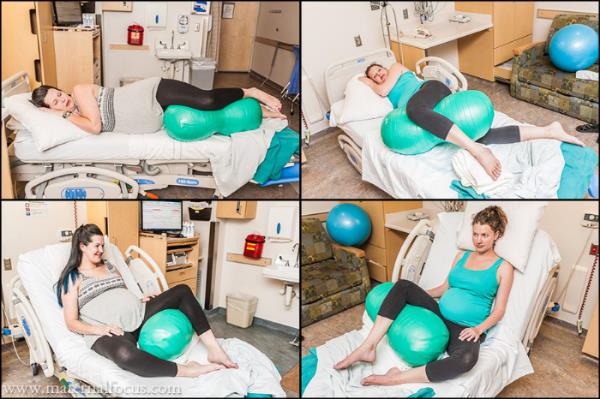
Using a Peanut Ball in Labor

From Director of Birthwell Birthright, Tanya Strusberg, comes an amazing article on the benefits of using a peanut ball versus pillows, blankets or even a traditional swiss ball.  Specializing in Lamaze childbirth education, she is a great resource for natural birth techniques.  We utilize the peanut at Embrace Birth Center and think it's an extremely useful tool for mothers to promote dilation and increase comfort.


What is a peanut ball and why could it be helpful for me in labour?

Most people are familiar with the standard birth ball (sometimes called a fit ball or Swiss ball). They come in a range of sizes to suit women of all heights and are without doubt an essential labour tool to have.

The standard round birth ball has become a common site in a birthing suite, but the peanut ball is a relative newcomer.  In the last few years, the use of a peanut ball for labour has increased, especially for mums who choose an epidural or who need to rest. The peanut ball doesn’t slip, slide or flatten like pillows, keeping a mum’s legs properly supported and the pelvis open. The use of a peanut ball has been seen to help shorten labour. Although there has not been a large study on their effectiveness, many midwives and hospitals are seeing excellent results.

A peanut ball is similar to a birth ball, except that it dips in the middle, giving it its distinctive peanut shape. Peanut balls also come in a variety of sizes, again depending on a woman’s height, but also depending on how she plans to use it. Smaller peanut balls are designed to be used between your legs, whereas larger peanut balls are designed to be sat on, or to lean over.


Peanut Balls are typically used two ways primarily:

1. The labouring mother is in a semi-reclined position, with one leg over the ball, and the other leg to the side of the ball. The doula, midwife, or other support person pushes the ball as close to the mother’s hips as is tolerable for her. Many feel this position promotes dilation and descent with a well-positioned baby.

2. While the mother is in a side-lying or semi-prone position, the peanut ball is used to lift the upper leg and open the pelvic outlet. Many feel this position helps rotate a baby in a less-favorable posterior position to a more favorable position for delivery.


What size peanut ball should I use?

Peanut balls come in a number of sizes:

45cm – Recommended for women who are under 160cms
50cm – Recommended for women who are 160cm – 170cms (most common size)
60cm – Recommended for women who are 174cm or taller or plus size women
70cm – ONLY to sit on and straddle


For the full article along with even more great resources, click here to visit the Birthwell Birthright website.

Monday, May 16, 2016

Grand Opening Success! Take a Peek Inside

We had such a lovely time at our Grand Opening yesterday!  It was a successful event and we were so thrilled to be hosting amazing moms, expecting mothers, their partners, and their children!  It was all around joyful to be sharing something that we have been working so hard towards these past few months and seeing it all come to fruition.  Embrace Birth Center is up and running along with our Wellness Collective!  If you didn't get a chance to visit us yesterday, here's a peek at what's inside!

 Welcome to our Birth Center!  Our very own Kathryn Haines is speaking to expecting parents in the Midwives meeting room!

Here we have everyone gathered in one of our birthing suites, along with our examination room and our sitting area at the front entrance.  The photography you see around the office are all works of local photographers you can work with for your very own pregnancy and infancy portraiture!  The collection shown here is of actual births we've performed in Richmond.

This is one of our amazing birth suites, built with maximum comfort in mind.  A space for your family - a retreat - with extra deep soaking tubs, plush linens, and private bathrooms!

We are very excited about this little tree!  We will be hanging snaps of all the beautiful babies we deliver on its branches!  Blue for water babies, green for earth babies!

Our Wellness collective features Green Baby Planet, who focuses on safe, natural and eco-friendly products for your little ones!  We also offer prenatal yoga classes!  There is still room available in our collective, so if you'd love to contribute to this wonderful community of support, please contact us.